
From Excavation to Interpretation: The Zooarchaeology Pipeline
At Excavation:
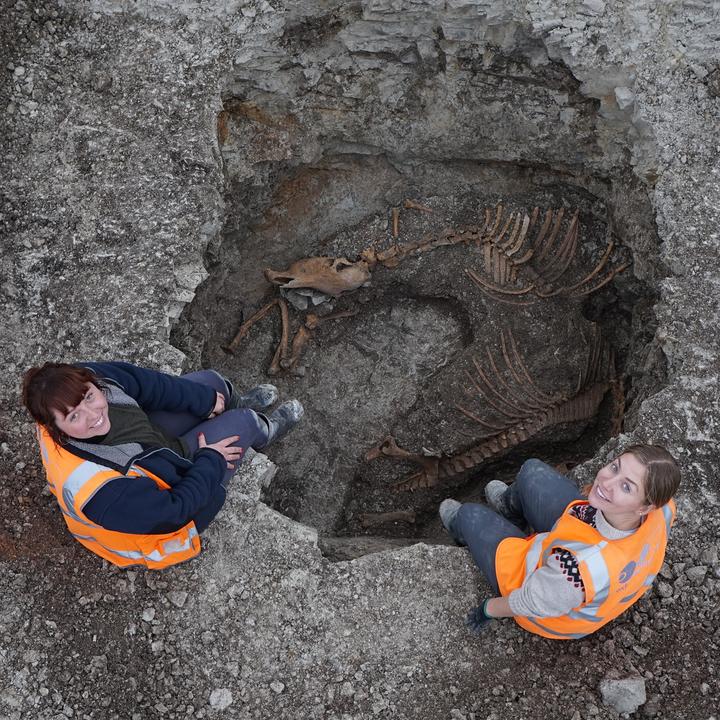
1. Context
The context, or provenance, of a zooarchaeological remain is its exact location of deposition in the ground and its physical relationship to the surrounding material. Context anchors a find in time and space, providing the associations needed to interpret its age, function, and place within a wider cultural story.
Dig Deeper: Where does a find sit within the site's wider story?
2. Animal Bone Group (ABG)
ABG refers to a cluster of remains from a single skeleton, found either in anatomical position or clearly associated within one context — for example, a partial carcass or a complete animal burial. In some literature, the A instead stands for articulated or associated. ABGs offer a rare opportunity to study variations and signs of disease at the individual level. When articulated, they indicate a lack of post-depositional disturbance and are ideal for radiocarbon dating.
Link It: Remember disarticulated remains? Check the Keywords section. Why would disarticulated remains not be suitable for dating (defined later in this document)?
Dig Deeper: Was an animal’s deposition a deliberate act, or the result of later disturbance?
3. Plans and Recording Forms
A plan is a technical drawing recording the position, shape, and spatial relationships of features, structures, and deposits including animal remains on site. Recording forms complement this, particularly for ABGs: a flattened outline of a common large mammal skeleton is shaded or annotated to show which bones are present, along with other features of interest such as disturbance. Together with photographs, plans and recording forms create a permanent, objective record of a context and its contents.
Dig Deeper: How were the bones arranged, and could this be reconstructed later from the record alone?
4. Finds Bag
Heavy-duty, clear polythene grip-seal Finds Bags with write-on panels are used across archaeology, from excavation to archive, to safely store and transport finds such as faunal remains.
Dig Deeper: How do we keep every bone traceable and free from contamination?
5. Flotation
Flotation is a water-based processing technique used to recover small organic remains including microfauna and other small finds from excavated soil samples. Soil is submerged in water: less dense material such as charred seed and charcoal floats to the surface, while denser items like small bones and teeth sink and can be caught using a mesh.
Link It: Remember sieving from the Keywords section? Think about how sieving and flotation work together.
Dig Deeper: What might be missed if only the material visible by eye is collected?
Post-Excavation:
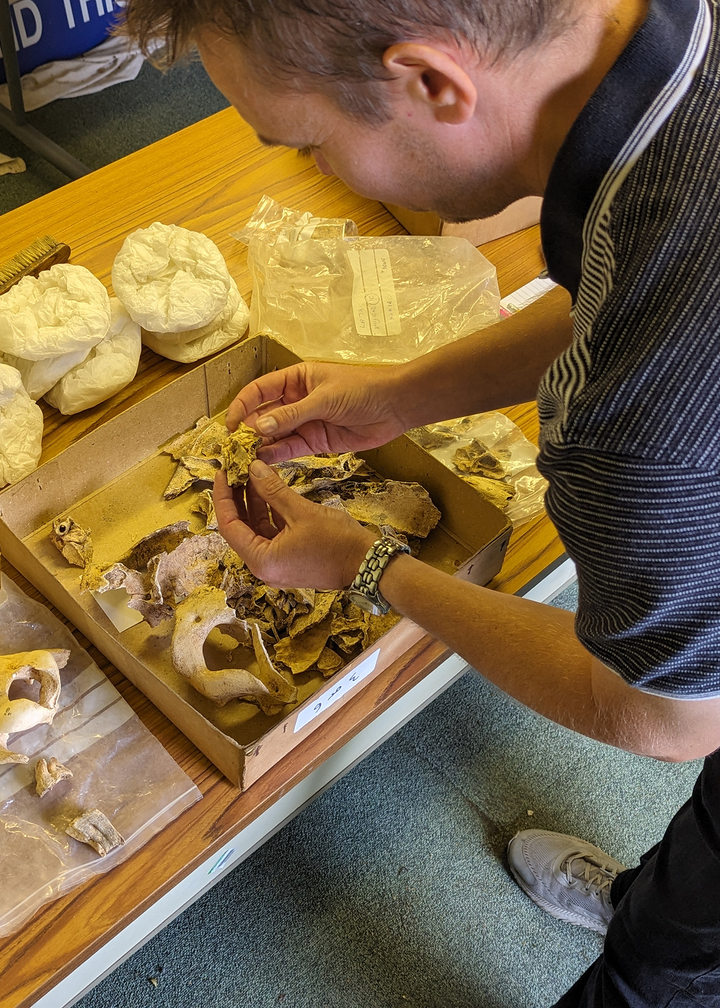
1. Discolouration
Discolouration can occur on bones through interaction with components of the burial environment, such as metals and minerals, or through human-mediated taphonomy. Prolonged sunlight exposure can bleach bone to a chalky white, while proximity to corroding copper and its alloys like bronze produce blue-green staining, and iron or manganese staining appears as rust-orange to brown tones. Black, grey or white discolouration can indicate the bone was burnt or charred, either intentionally or naturally.
Dig Deeper: What might the colour of a bone tell you about how it was deposited, before any lab analysis is even done?
2. Processing Marks
Processing marks refer to cut, chop or gnaw marks found on animal bones. Their presence can reveal whether remains were processed by humans for extraction of meat or skin, or scavenged upon by other animals.
Link It: Remember Taphonomy from the Keywords section? With relation to discolouration and processing marks, think about human-mediated versus natural taphonomy.
Dig Deeper: How might you tell butchery marks apart from carnivore gnawing and why would that distinction matter for interpreting a site?
3. Sex Identification
Beyond species and skeletal element identification, some bones allow sex identification through sexually dimorphic features, which refer to morphological differences between sexes within the same species. One example is canine teeth of pigs – male pigs have larger canines with triangular, open roots as they grow continuously throughout their lives, whereas female pig canines are comparatively smaller and closed at the base.
Dig Deeper: If dimorphic features are only present on certain skeletal elements, what challenges might that create when sexing a fragmented individual?
4. Ageing
Age at death of an animal can be estimated using several methods, most commonly assessment of teeth. Following sequential eruption and growth, teeth wear down progressively and distinctive features of each stage can be used for ageing the animal. Another common approach examines bone development: some skeletal elements, such as the humerus or femur, form from several parts that fuse together in sequence, allowing estimation of age at death. This method gives a more precise range for younger animals, since bone fusion is largely complete by early adulthood.
Link It: Remember Reference Collections, MNE and MNI in the Keywords section? Can you see how these strands of information together can help study individual level details as well as broader population level patterns?
Dig Deeper: Why might tooth wear and bone fusion give different levels of precision for different animal age groups?
5. Palaeopathology
Many diseases leave no trace on the skeleton and remain invisible to zooarchaeologists, unless invasive techniques are applied (some of which are discussed below). Pathologies commonly encountered on animal remains fall into four categories: injury or trauma, such as fractures; joint diseases, such as osteoarthritis; metabolic diseases, such as rickets; and infections and inflammation, such as tuberculosis. Palaeopathology provides a range of information, from reconstructing the disease biography of an individual animal, to exploring health and disease at the population level, and revealing patterns in human-animal-environment interactions.
Dig Deeper: What might a single pathology tell you about one animal’s life, and what would you need to infer population-wide patterns instead?
6. Coprolite/Palaeofaeces
Through desiccation (extreme drying) or mineralisation, ancient faeces can survive in the archaeological record as coprolites or palaeofaeces. They may contain undigested seeds, pollen, or small bone fragments, offering direct (though short-term) evidence of an animal’s diet. They can also contain parasite eggs, providing insight into health and disease.
Dig Deeper: What can coprolites tell you that a bone assemblage alone cannot?
7. Trackways
Preserved footprints and trackways of animals are often found on archaeological tiles. These impressions would have been created when soft clay tiles were laid out to dry before firing, and domestic or nearby wild animals wandered across the unbaked material. They can reveal which animals lived with and around humans at a particular site.
Dig Deeper: What might a trackway reveal that bones alone cannot?
In the Lab:
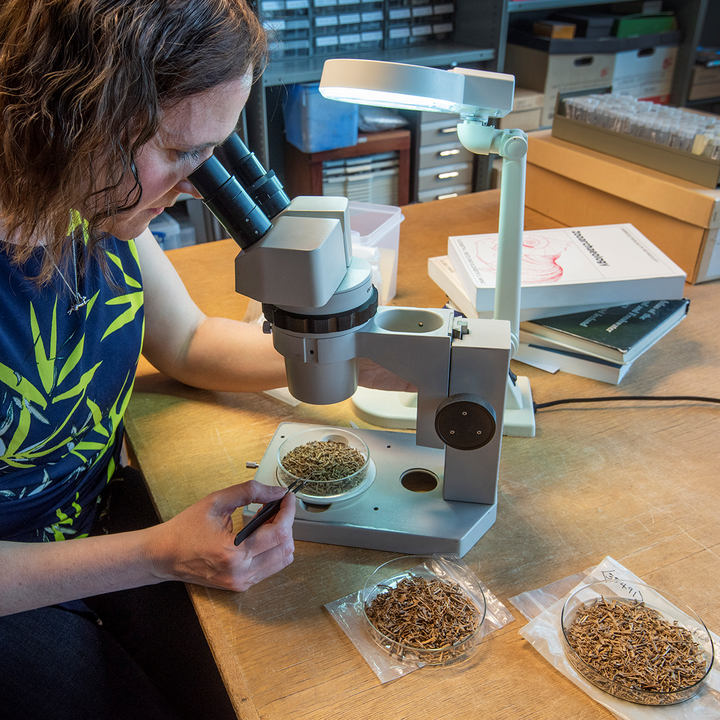
1. Radiocarbon Dating
Radiocarbon (14C) dating measures the decay of a radioactive carbon isotope in organic material to estimate how long ago an organism died. In zooarchaeology, articulated remains are especially valuable for this purpose, since their lack of disturbance confirms that the dated bone reflects the actual moment of deposition, rather than material redeposited from an earlier context.
Link It: Remember ABGs and their suitability for radiocarbon dating discussed above?
Dig Deeper: Why might an archaeologist choose to date an articulated skeleton over a loose bone from the same context?
2. Genetic Analysis (aDNA)
Ancient DNA (aDNA) analysis involves extracting and sequencing DNA preserved within archaeological bone or teeth. In zooarchaeology, this allows species identification where morphology is ambiguous or remains too fragmented to assess by eye, confirms sex at a genetic level, and can trace domestication processes and lineages by comparing ancient populations to modern ones. An animal’s aDNA can also contain the genetic information of bacteria or viruses within it, revealing the presence of infectious diseases.
Dig Deeper: How can genetic analysis and palaeopathology be combined for a greater understanding of health and disease in zooarchaeological remains?
3. Isotope Analysis
Isotope analysis measures the ratios of stable isotopes, such as carbon, nitrogen, oxygen, and strontium, preserved in bone collagen and tooth enamel. These ratios reflect the diet and environment an animal experienced while that tissue was forming. In zooarchaeology, carbon and nitrogen isotopes are used to reconstruct diet and an animal's position in the food chain, while oxygen and strontium isotopes can reveal geographic origin and mobility, useful for tracing herding practices, trade, or seasonal movement.
Dig Deeper: What might isotope evidence of long-distance animal movement tell you about ancient trade or herding practices?
4. Zooarchaeology by Mass Spectrometry (ZooMS)
ZooMS identifies species by analysing the unique collagen preserved in animal remains. Collagen is built from chains of amino acids, and small variations in this sequence occur between species. While it can be applied to bone fragments too degraded to assess macroscopically, it is particularly valuable for identifying species from material such as leather or parchment.
Dig Deeper: Where might you find a sample to apply ZooMS to that isn't buried underground? Hint: think about where old parchment and leather bindings tend to be kept.
Integrating information:
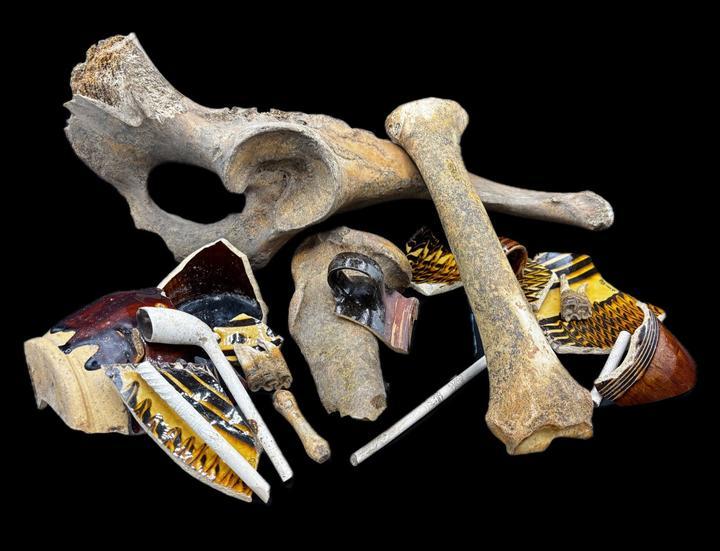
1. Domestication
Domestication is the process by which a wild species becomes adapted, over generations, to living alongside and being managed by humans. Zooarchaeologists identify it through several converging lines of evidence. Morphological change, such as reduced body size or altered horn shape, and genetic markers can distinguish domestic lineages from their wild ancestors.
Link It: Which excavation/post excavation/laboratory sections above link to domestication?
Dig Deeper: If you only had one line of evidence, what might you risk missing?
2. Native
Determining whether a species is native to a region, or was introduced by human activity, draws on chronology, geography, and genetics together. Radiocarbon dating establishes when a species first appears at a site or region, isotope analysis can indicate whether an animal spent its life locally or moved from elsewhere, and aDNA can reveal whether a population's genetic ancestry matches local wild populations or points to introduction from further afield.
Link It: Remember Radiocarbon Dating, Isotope Analysis and aDNA from previous sections?
Dig Deeper: A new species suddenly appears in the faunal record at a site. What kinds of evidence would help you tell apart a natural range expansion from a human-introduced population?
3. Seasonality
Seasonal indicators in animal behaviour or morphology, such as migratory patterns or shedding of antlers, can not only provide information about the movement and habits of zooarchaeological populations, but also indicate seasonal trends of animal management and exploitation.
Dig Deeper: Why might knowing the season of a hunt matter as much as knowing the age or species of the animal? What more would it tell us about human behaviour in past populations?
4. Zoonosis
A zoonosis is an infectious disease capable of transmitting between animals and humans. In zooarchaeology, evidence comes from palaeopathological changes on animal bone consistent with known zoonotic diseases, and increasingly from ancient pathogen DNA recovered directly from bone or dental calculus. Identifying zoonotic disease in the archaeological record helps trace how and when particular diseases entered human populations, often linked to increased human-animal contact through domestication or dense settlement.
Link It: Remember Palaeopathology and Genetic Analysis discussed previously?
Dig Deeper: How would the intensification of human-animal contact through domestication have created new opportunities for diseases to jump between species?
5. One Health
One Health is a framework recognising that human, animal, and environmental health are interconnected, rather than separate fields to be studied in isolation. In zooarchaeology, this means reading zoonotic disease, animal management practices, and environmental change together, rather than as separate lines of evidence, to understand health at a landscape scale, in the past as much as the present.
Link it: Look at Zoonosis above, as well as Palaeoenvironment below.
Dig Deeper: How might studying past human-animal-environment relationships inform how we think about disease risk today?
5. Palaeoenvironment
Palaeoenvironment refers to reconstructing past ecological conditions, such as climate, vegetation, and landscape, from faunal evidence. The presence or absence of particular species can indicate habitat type, since many animals have specific environmental requirements, while isotope values in their bones can reflect broader climatic conditions during the animal's lifetime.
Link It: Remember Isotope Analysis discussed previously?
Dig Deeper: If a species known to need dense woodland slowly disappears from the faunal record at a site over time, what might that tell you about the surrounding landscape?
You have now followed the journey of faunal remains from trowel to interpretation: through excavation, the lab, and the connections drawn between them. Before you go, take a moment to reflect on the two following aspects.
Time to reflect...
Career focus: Which section of this pipeline appealed to you most, and why? This is worth thinking about when talking to specialists, choosing modules for study, or planning next steps.
Test your understanding: Pick one thread of integration, for example domestication, and trace it backwards. What excavation, post-excavation, and lab evidence would need to come together to build that conclusion?
Useful Links:
- Mastering micropipetting - biology lab practical – Guided activity for learning or brushing up on an essential laboratory skill for archaeological scientists.
- A study of wild and domestic animal evidence from animal marks on Roman ceramic tiles | The Archaeologist – Short article on trackways found in Roman ceramic tiles.
- ZooMS Species identification of parchment using peptide mass finger printing – A 5 minute video from the University of York.
- Genetic history of dog domestication | Science Sessions | PNAS - A 15 minute podcast from researchers that dives into the details of dog domestication.
- You are what you eat: exploring questions of migration, diet and status through the use of isotope analysis - Cotswold Archaeology - Short blog from Cotswold Archaeology about Isotope analysis.
- Radiocarbon Dating - Oxford - Simple introduction to Radiocarbon Dating from the laboratory at Oxford.