
Zooarchaeology
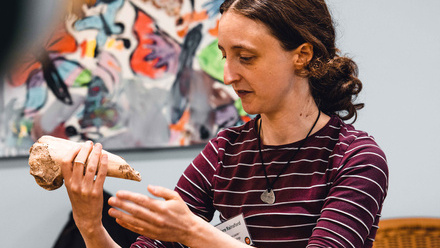
Led by Dr Clare Rainsford, the Zooarchaeology session at Unearthing Futures introduced basic animal anatomy, involved hands-on identification of bones and species from the archaeological record, and discussing how animal bones support archaeological interpretation.
Whether you are drawn to scientific techniques in archaeology or curious about how specialists analyse past human-animal interactions, zooarchaeology offers a fascinating window into the past, and a vital skill set for anyone interested in environmental archaeology, bioarchaeology, or laboratory work.

Disarticulated
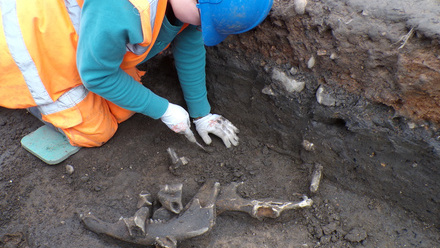
Most animal remains found at archaeological sites are disarticulated, which means the bones are not found in situ (i.e., in their original place of deposition) as a complete, connected skeleton – instead they are scattered and mixed with the remains of other animals. Disarticulation can occur through a variety of taphonomic processes, and in most cases, it is not possible to identify whether disarticulated bones belong to a single individual.
Faunal Assemblage
Faunal remains include animal bones, teeth, antlers, shells, and other biological materials recovered from archaeological contexts. The collection of all faunal remains recovered from a particular site or context, that can be analysed together to understand patterns, is known as an assemblage.
Minimum Number of Elements (MNE)
Definitions vary slightly between studies, but MNE typically refers to the minimum number of individual skeletal specimens of a given anatomical part present in an assemblage, after accounting for overlaps and refits between fragments.
Minimum Number of Individuals (MNI)
As with MNE, calculations of MNI vary across studies, but it generally involves counting the most frequent single skeletal element of each species (from list of MNEs) and taking into account additional variables such as side, age, sex and sometimes size, to estimate the lowest possible number of individuals of that species represented within the assemblage. In other words, MNI is the lowest estimate of how many animals of a particular species were likely present (e.g., died and were deposited) at the site.
Reference Collection (including Index Collection)
Zooarchaeologists often identify which species a bone or fragment belongs to by comparing it against labelled reference collections. Alongside illustrations and keys, these collections include actual skeletal specimens allowing comparisons from multiple angles for higher accuracy. A reference collection usually contains several specimens for each relevant species, reflecting differences in size, sex, age, geography, season, and individual variation. They are often organised as an index collection, grouping the same bone type across different species to aid comparison.
Sieving
Following hand-collection of larger bones, excavated soil can be sieved using varying mesh sizes to capture smaller bone fragments. This is important for recovering remains of microfauna such as small mammals, fish, amphibians, reptiles and birds. Sieving can be carried out dry, if water is scarce or if it may damage the finds, but most sites in Britain require wet sieving since the soil in many places is clayey and needs breaking down.
Taphonomy
Taphonomy refers to the changes animal remains undergo after death, both natural and human-mediated. Taphonomic processes such as decay, weathering, burning, scavenging or trampling can affect the preservation of data, and impact interpretation.


Discover what it was like on the day with our behind-the-scenes reels.


Dr Clare Rainsford
Question: Has working with animal remains changed how you think about human-animal relationships today?
Absolutely! I think it's made me really aware of our current disconnect from the natural world and how different that was in the past. Fossil fuels have replaced animals in a lot of roles, from transportation to ploughing to clothing and fibres to the materials we make objects from (how often do you see items made out of bone today?). Obviously a lot of this change is positive, but I do wonder what we might be missing.
Question: What's the relationship between zooarchaeology and modern veterinary or agricultural science; do you ever find yourself talking to people in those fields?
I think it would be great if it were closer. Pathology research (into ancient animal disease) in particular benefits a lot from collaboration with vets. It's been really good to see a trend in zooarchaeology towards working with nature conservancy, rewilding programmes, and collaborating with farmers to think about what the past might tell us about what a sustainable future looks like.

In-person attendees:
By participating in a hands-on zooarchaeology session as part of Unearthing Futures, a youth-led archaeology outreach event held in September 2025 and led by Dr Clare Rainsford, I gained practical experience handling reference skeletons to understand comparative skeletal anatomy across species. At the session I examined material from an archaeological teaching collection to identify evidence of bone modification, including butchery marks and carnivore gnawing. I practised safe specimen handling and object-based identification under expert guidance. Throughout the session, and afterwards on the Unearthing Futures website, I engaged with identification resources developed specifically for the session's workshop series to support hands-on analysis.
Online learners:
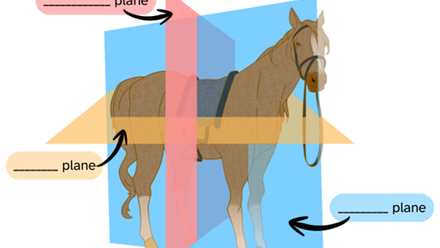
I have completed a self-directed zooarchaeology learning resource developed from Unearthing Futures, a youth-led archaeology outreach event led by Dr Clare Rainsford in September 2025. I have built knowledge of skeletal anatomy and directional terminology through interactive, image-based identification activities. I practised recognising evidence of bone modification, including butchery marks and carnivore gnawing, using guided digital exercises adapted from in-person teaching methods. I also engaged with zooarchaeological identification resources originally developed for a related in-person workshop series. Through this, I developed independent research and object-identification skills applicable to archaeological and biomolecular science contexts.

Jobs desk | Museum Studies at Leicester | University of Leicester
Jobs Links - National Museum Directors' Council Website
Museums, Galleries and Libraries
Job vacancies - AIM - Association of Independent Museums
Find a Job - Museums Association
Vacancies | The National Heritage Memorial Fund iRecruit PortalName
Jobs and Volunteering Opportunities | Historic Houses
Volunteering at North East Museums | North East Museums
Remote Volunteering – a digital toolkit - Museums and Heritage Highland
Volunteer | Natural History Museum
Volunteer - Volunteering with Museum of the Home
Volunteer with Historic England | Historic England
Jobs desk | Museum Studies at Leicester | University of Leicester