
Piece it Together
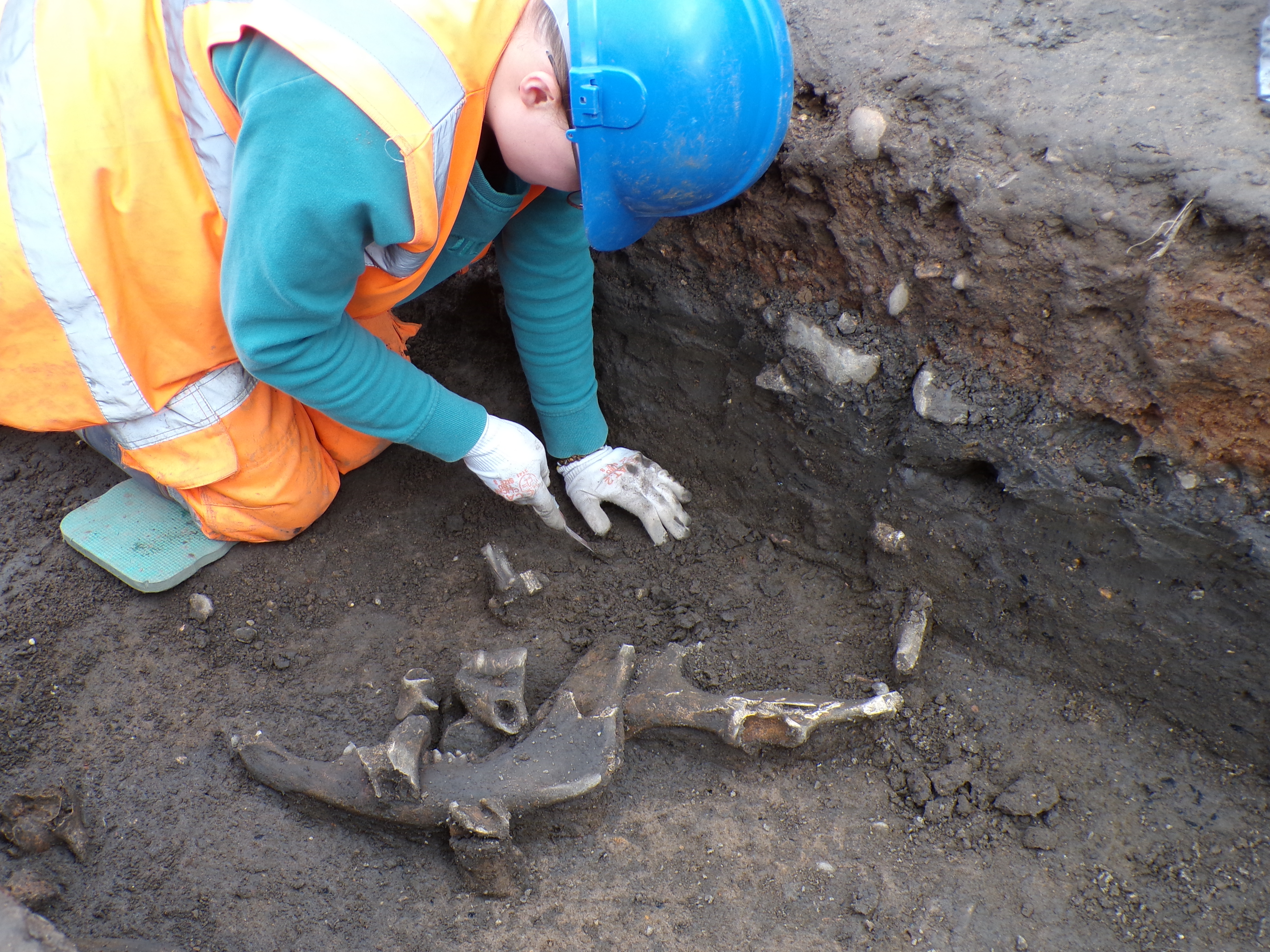
To undertake this activity you will need:
- Printed articulated skeleton reference sheets (one per animal) and disarticulated bone cut-out sheets (one or more sets per animal).
- Printed labels for birds and mammals
- Scissors
- A tray, mat, or envelope to keep each animal's pieces separate before mixing
Method
- Print the articulated and disarticulated skeletons, along with the labels for birds and mammals.
- Cut out the disarticulated bone pieces for each animal, keeping the sets separate to start.
- Using the articulated skeleton image as your reference, arrange each set of disarticulated bone pieces to reconstruct that animal's skeleton. Don’t forget to label them as you go!
- Note that not every bone is included in each set. This reflects real excavations, where full skeletons are rarely recovered intact.
- Once you're confident identifying each animal's skeleton individually, try the harder challenge: mix all the disarticulated pieces together, then sort and reassemble each animal separately using only the reference sheets as your guide.
Dig Deeper:
- When the pieces were mixed, what features helped you work out which bone belonged to which animal: size, shape, joint surfaces, something else?
- Which bones were missing from your sets? If this were a real excavation, how might those absences change what a zooarchaeologist could (or couldn't) conclude about the animal?
- Which animal was hardest to reconstruct, and why: an unusual skeleton shape, similar-looking bones to another animal, something else?
Real assemblages are almost never complete, and as you perhaps noticed even with all the pieces in front of you, matching bone to animal takes practice. Every partial skeleton a zooarchaeologist studies is this same puzzle, just with far higher stakes and far fewer clues.
Useful Links:
- Skeletons! – Museum of Zoology Blog – A great introductory guide to the skeleton and its parts, from the Cambridge Museum of Zoology.
- Idaho Virtual Museum - Osteo – An online collection of 3-dimensional animal models for exploration, from the The Idaho Museum of Natural History.
- OsteoID Bone Identification - Free online tool to explore skeletal elements across species, through 2D images with scale and measurements.