
Archaeology and Nature
It is tempting to think of archaeology and nature as separate. In reality, they are part of the same story.
Our landscapes have been shaped by thousands of years of relationships between people, animals, plants, geology and climate. People have cleared woodland, grazed livestock, dug ditches, planted hedges, quarried stone, managed rivers and built settlements. At the same time, the natural world has influenced where people lived, what they ate, how they travelled and the materials they used.
That is why this year’s Festival of Archaeology is exploring Archaeology and Nature. Archaeology can help us understand not only what happened in the past, but how the places around us became what they are today, and how we might care for them in the future
Nature leaves clues
When archaeologists investigate a site, they are not only looking for buildings, pottery and objects.
Tiny pieces of charcoal can tell us which trees people burned. Seeds and grains can reveal the food they grew and ate. Pollen preserved in soil can help reconstruct lost landscapes, while animal bones, shells and insects can tell us about diet, farming, climate and the wider environment.
The landscape itself is also an archaeological record.
An old hedge may preserve the line of a former boundary. A holloway worn deep into the ground can mark centuries of movement. Coppiced trees can show how woodland was managed, while ridges in a field may reveal where people once grew crops.
Once you begin to notice these traces, a familiar walk can look completely different.
Our free Local Explorer Challenge, available in English and Welsh, can help you investigate the archaeology and nature in your neighbourhood.
Looking backwards can help us move forwards
Nature recovery often begins with a difficult question: what are we trying to recover? Archaeology can help us begin to answer that question.
Historic maps, buried soils, pollen, seeds, animal remains and archaeological features can show where rivers once flowed, where woodland grew, how wetlands were managed and which habitats existed before modern development.
This evidence can become a practical tool for the future. It can help identify suitable places to restore wetlands, reconnect rivers or create woodland. It can show which traditional approaches to grazing, water management or woodland care supported habitats over long periods
By bringing archaeologists, ecologists, land managers and local communities together, we can make better-informed decisions for both people and nature. The challenges are shared, so the solutions need to be shared too.
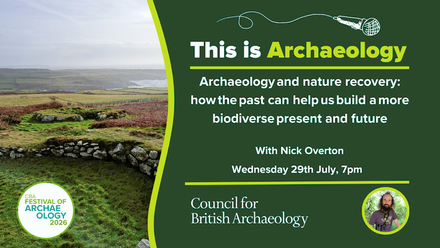
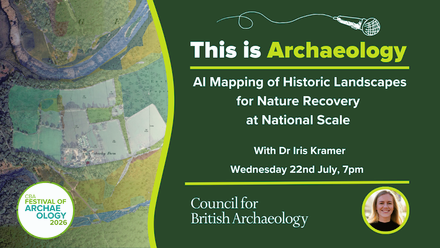
You can find out more about how archaeology can help nature recovery in our De Cardi lecture by Dr Anwen Cooper, or in our upcoming This is Archaeology lectures.
How you can help
The environmental challenges we face can feel enormous, but caring for local places is part of the answer.
Look more closely. Notice old trees, paths, walls, banks, ponds and changes in the shape of the ground. Think about how people, wildlife and water have shaped the place.
Record what you find. Wildlife records help researchers understand how species and habitats are changing. Photographs, maps and notes can also help document local archaeology. Leave wildlife and archaeological material where you find them.
Make space for nature. Grow plants that provide food and shelter, avoid unnecessary pesticides, provide water and allow parts of gardens to become less intensively managed.
Respect the places you visit. Follow the Countryside Code, keep dogs under control, take litter home and avoid climbing on archaeological sites or disturbing wildlife.
Champion historic places. Pay attention to local planning applications and ask how archaeology, historic landscapes and wildlife have been considered. Our Listed Buildings Casework team works on over 5500+ planning applications each year to provide expert advice and advocate for informed change that respects historical character and prevents demolition. Find out more about our work
Did you know?
Reusing historic buildings, rather than demolishing and replacing them, could reduce associated carbon emissions by more than 60% by 2050.
Try it at home
The Young Archaeologists’ Club’s free Archaeology and Nature Resource Pack includes activities made using simple materials you may already have at home.
The pack was created by young people for young people and is suitable for ages 8 and over.