
Digital dust? Finding unexpected stories in laser scans
Last year, I spent many hours working with laser scan data from archaeological sites, including a cave in a sacred grove in Zanzibar and a Bronze Age burial on Dartmoor. It’s rewarding but often detailed, repetitive work, and I found myself gazing at an illustration of an African harp from my student days and missing the calm process of pen, paper, and permatrace illustration.
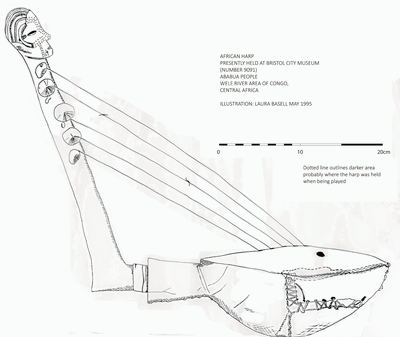
That moment got me thinking: archaeology today produces massive amounts of digital data, but not all of it gets used, and formats change fast. New technologies like augmented reality and immersive storytelling are transforming how we create, explore, and share the past. Equally, the way we record, clean, and present data really matters as it shapes emotional connections to the past.
Exploring the shimmering points, I noticed beautiful rendering glitches, ghostly figures, fragments of birds, insects, vehicles, and my colleagues, captured as they inadvertently crossed the scanner’s path. As I painstakingly edited them out to facilitate modelling and reduce file sizes, I realised I was deleting a hidden story. I was viewing the space and time we spent on site, compressed and recreated into two- and three-dimensional images. Here were digital echoes of our archaeological process as we collected, interpreted, and reconstructed fragments of the past. In many ways these echoes epitomise the nature of archaeology itself.
Whether through music, dance, words, or images, archaeology has always been about storytelling, and our urge to tell stories runs deep into our evolutionary past. In a world overflowing with narrative, exhibitions, and digital experiences, our challenge is to help people pause and connect with a place, a moment, or a memory – to understand where we came from. But what we choose to include or erase from the record shapes the stories we can tell. While technology can offer clarity, it can also limit imagination by showing too much and leaving little room for wonder.
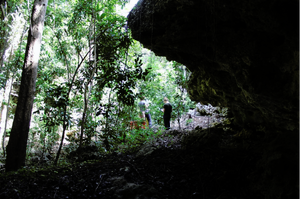
In the video ‘story’ linked below, I showcase waste from my (virtual) cutting room floor to reveal hidden narratives of archaeological practice. I paired the scan data visuals with Jean Michel Jarre’s laser harp music from the album Equinoxe to evoke the sense of magic I felt analysing the data. Appropriately, the album cover artwork by Michel Granger shows enigmatic ‘observers’, possibly watching natural phenomena, machines, or space itself. My images are simply screen grabs of things I found interesting as I worked, and the captions are snippets of thought, memory, and amusement sparked during the process. Together, I hope they form a playful reflection of light, time, beauty, and the complexity of archaeology in the digital age.