
Pest Management - Pesky Insects Munching in Our Museums
Managing pests for preventative conservation
Pest management should not be a reaction to the discovery of insect activity and damage. Success comes from identifying risk and implementing a strategy to best minimise those risks and avoid a pest situation from escalating. Every museum or collection can reduce the risk by adopting an integrated pest management (IPM) programme. This includes adopting good building practice to keep pests out, monitoring for pest activity and targeting treatment only where and when it is needed
Key steps for stopping pests
To stop insects getting in consider
- Pest proofing buildings
- Housekeeping
- Quarantine procedures
Adults vs Larvae
Distinguishing between an adult and a larvae is essential for effective pest management. It is the larvae which tends to do most of the damage on museum objects and buildings
Adults are typically larger and will be easier to spot. Larvae of an insect can look quite different to its adult form.
Main ones to look out for:
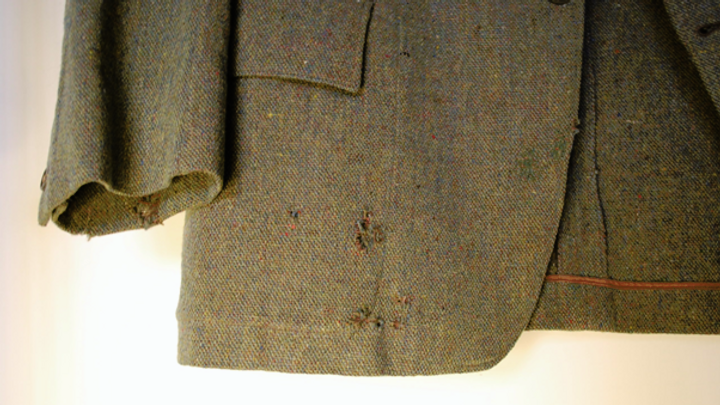
Carpet Beetles - Larvae eat wool, fur, feathers, silk and skins. It is the larvae that cause most of the damage, but they are easily recognisable. Known as “woolly bears” they can be up to 5mm long, have brown stripes and are hairy and shed their skins as they grow. The adult beetles are roughly 2-3 mm long and vary in colour depending on the type of beetle. The varied carpet beetle is a mottled cream, light and dark brown
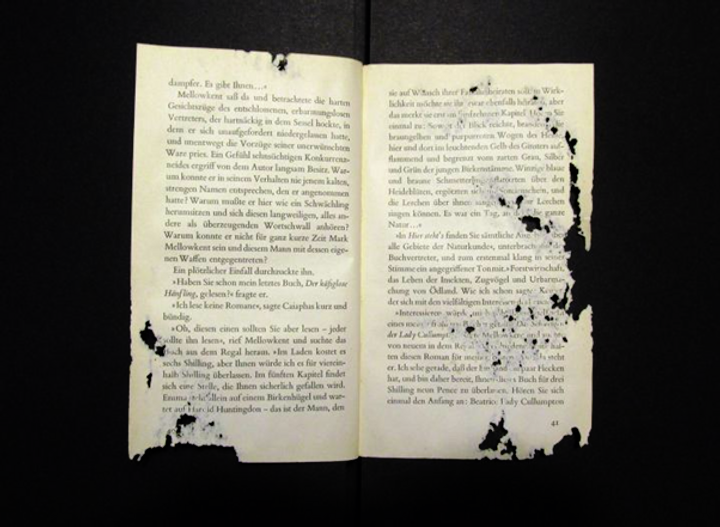
Silverfish - Nymphs and adults eat the surface of damp paper, books and textiles. Silverfish are different to beetles and moths as they do not have larvae, they just have smaller versions of the adults which are called nymphs. These nymphs are significantly smaller and transparent compared to the adults. Both the Nymph and adult will eat the microscopic mould found on the surface of paper, books and textiles. The damage they cause can be seen as either holes with irregular edges or patches where the surface has been grazed. Silverfish are a good indicator of high RH as they like to live in dark and damp conditions. They are also attracted to certain types of dyes so they attack these areas first. This can sometimes be seen in wallpaper where one colour has been eaten away and others haven’t. There are two types of silverfish to look out for, the Common silverfish and the Grey silverfish. The Grey silverfish can be distinguished from the Common silverfish as has very long antennae and long tail bristles, and tiny hairs along its sides and back which can be seen under magnification
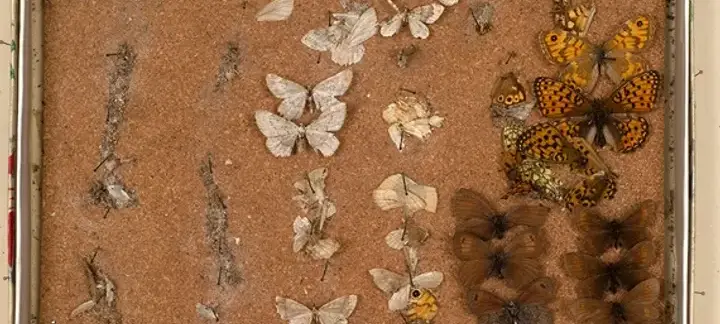
Webbing Clothes Moth - Larvae eat wool, fur, feathers, silk and skins. The adult Webbing Clothes Moth measures 6-10 mm long and is a shiny beige colour with no spots on the wings. They will lay eggs on a suitable food source for their larvae such as woollen textiles and animal specimens. The larvae spin a web of silk over the surface of the food source, under which they can freely move over the surface, eating as they go.
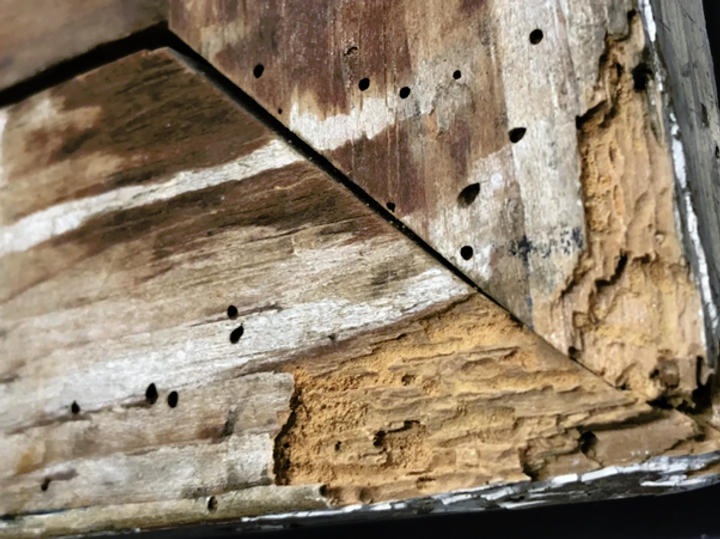
Furniture Beetle/woodworm - Larvae attack sapwood of many hardwoods such as oak and ash. The adult Furniture Beetle is 3-5 mm long and the larvae, although being smaller than Death Watch beetle, can cause the same amount of damage. The only difference is that they do not tend to feed on solid heart wood. Again, as the larvae tunnel through the wood they leave behind frass, which is smaller and wheat grain shaped. Furniture beetle has also been found in damp books and wood pulp. When the adults emerge they leave flight holes that are 1.5-2cm in diameter.
Trapping and Monitoring
In order to carry out monitoring of pests, ‘blunder’ traps are often used in key egress/ingress spots of buildings, or near a particularly sensitive object (for example, textiles on open display).
Activities
Take a look at this great series of videos created by South West Museums Development, which talks you through how pests are controlled in museums and heritage sites → The museum life of pests - Collections Trust
English Heritage have also created a handy visual poster to help you identify where pests are most likely to occur in buildings and what they look like → Insect Pests in Historic Houses and Museums
Now that you have looked at these, time for a task!
Take a look at these examples of pest damage - can you match up what insect that did this damage out of the main three pests above, knowing what type of things they like to eat (scroll to the bottom of the page for answers)?
Further resources
What's Eating Your Collection?
Historyonics-Guide-to-Pest-Management-in-Museums-2024.pdf
INTEGRATED PEST MANAGEMENT - English Heritage
Integrated pest management | National Museums Scotland
Activity Answers: silverfish, carpet beetle, furniture beetle and webbing clothes moth