
The past fizzes and trembles in the present
As you listen, imagine you are hearing objects that have lain below ground for hundreds or thousands of years. You are hearing them vibrate and hum as they interact with modern architecture, electronics, post-excavation processes like washing and sorting, and the hands of archaeologists at work.
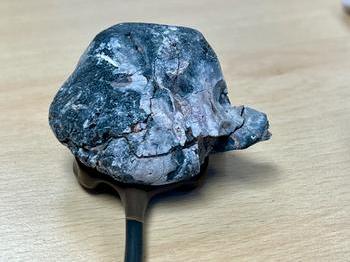
Clumps of soil fracture and dissolve as they are soaked in water. A lump of burnt flint amplifies the vibration of the table it sits on. Meanwhile, a similar piece from the same context is dulled by the cardboard archive box that contains it. The

inside of a postmedieval jug makes a deep, round hum. A pig’s long bone sounds high pitched and airy. These are the sounds that archaeology is always making, even when it seems silent to human ears. Archaeology resonates in contact with its surroundings. If we listen closely enough, perhaps it tells its own stories.
Sound is powerful because of what Angus Carlyle describes in his book On Listening as the ‘radical sensorial openness’ with which most of us encounter the heard, whether it is experienced through the ears or as vibration. As Brandon LaBelle writes in Acoustic Territories: Sound Culture and Everyday Life: sound is forceful and evanescent, intense and ephemeral.
Listening is feeling.
Sound can spark the imagination in new ways and create new kinds of understanding. How could listening practices help reveal the aliveness of archaeology? What stories might be generated through close listening?
This text accompanies a sound composition made from contact recordings of archaeological equipment and materials at Museum of London Archaeology (MOLA) in November 2024. You can listen to it online: https://bit.ly/ArchaeologySounds.
The work was conceived and developed by Alice Clough as part of her PhD research with MOLA and University of Bristol, supported by the Arts and Humanities Research Council [grant number AH/W002558/1]. It was made with the support of Alvaro Lopez, Brooke Pollio, David Bowsher, Emma Dwyer, Kasia Idzik, and Riley Thorne at MOLA.