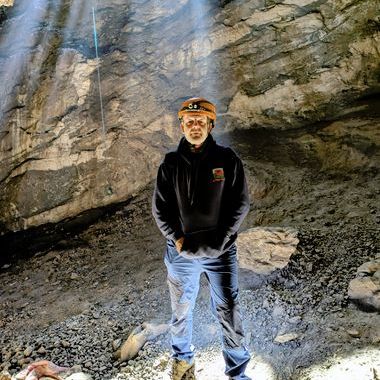
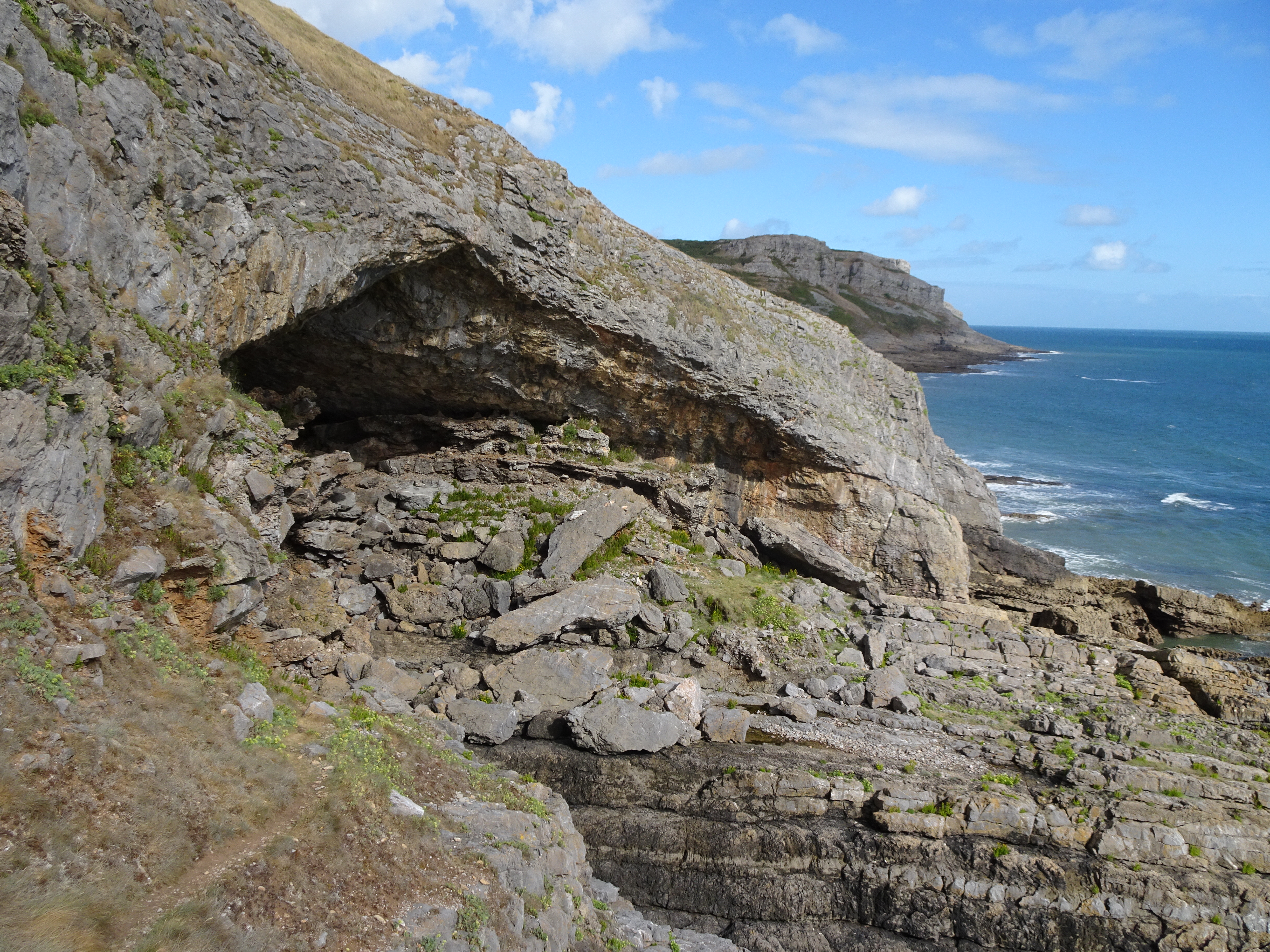
Bacon Hole is one of 95 caves along the dramatic southern limestone coastline of Gower and has attracted the attention of archaeologists and geomorphologists for at least 150 years. In 1912, Professor William Sollas and Abbé Breuil identified what was then believed to be the first Palaeolithic rock painting in the British Isles. The discovery, consisting of a series of horizontal lines, was reported in The New York Times and the Manchester Guardian, but was dismissed by 1928.
During a later visit with a television film crew, George and a team of specialists relocated the painted panel (noticed by Dr Barbara Oosterwijk). Within the following year, the First Art Team (based in Portugal) and other experts sampled the pigments to assess the presence of organic components (pigment recipes). The overlying calcite deposit was also sampled and successfully dated. To protect both the panel and the wildlife inhabiting this part of the cave, a steel grille was installed across the entrance to the side chamber where the paintings are located. Prior to installing the grille, a small excavation was undertaken, revealing something of its later history.
This lecture explores the story behind one of Wales’ most fascinating discoveries.