Dark Heritage refers to places where the remains of human activity are tied to conflict, atrocity, violence, oppression, and other difficult or traumatic pasts. These bits of our heritage are often neglected, intentionally obscured, or contested in how they are remembered and understood. My recent work seeks to develop Dark Heritage Prospection (DHP) as a new, interdisciplinary subfield that adapts and extends methods from archaeological prospection and geoforensics to investigate such places, support investigators and communicate the findings to the public.
This presentation will introduce the concept of Dark Heritage Prospection, outline why existing frameworks within archaeology and forensics might not be, on their own, sufficient for studying intentionally hidden or politically charged heritage. Through my case studies, mainly related to Nazi German sites of atrocity, I will demonstrate how near-surface geophysics, remote sensing, and integrated landscape analysis can be used to locate, image, and interpret features that communities, institutions, or history itself may prefer to forget.
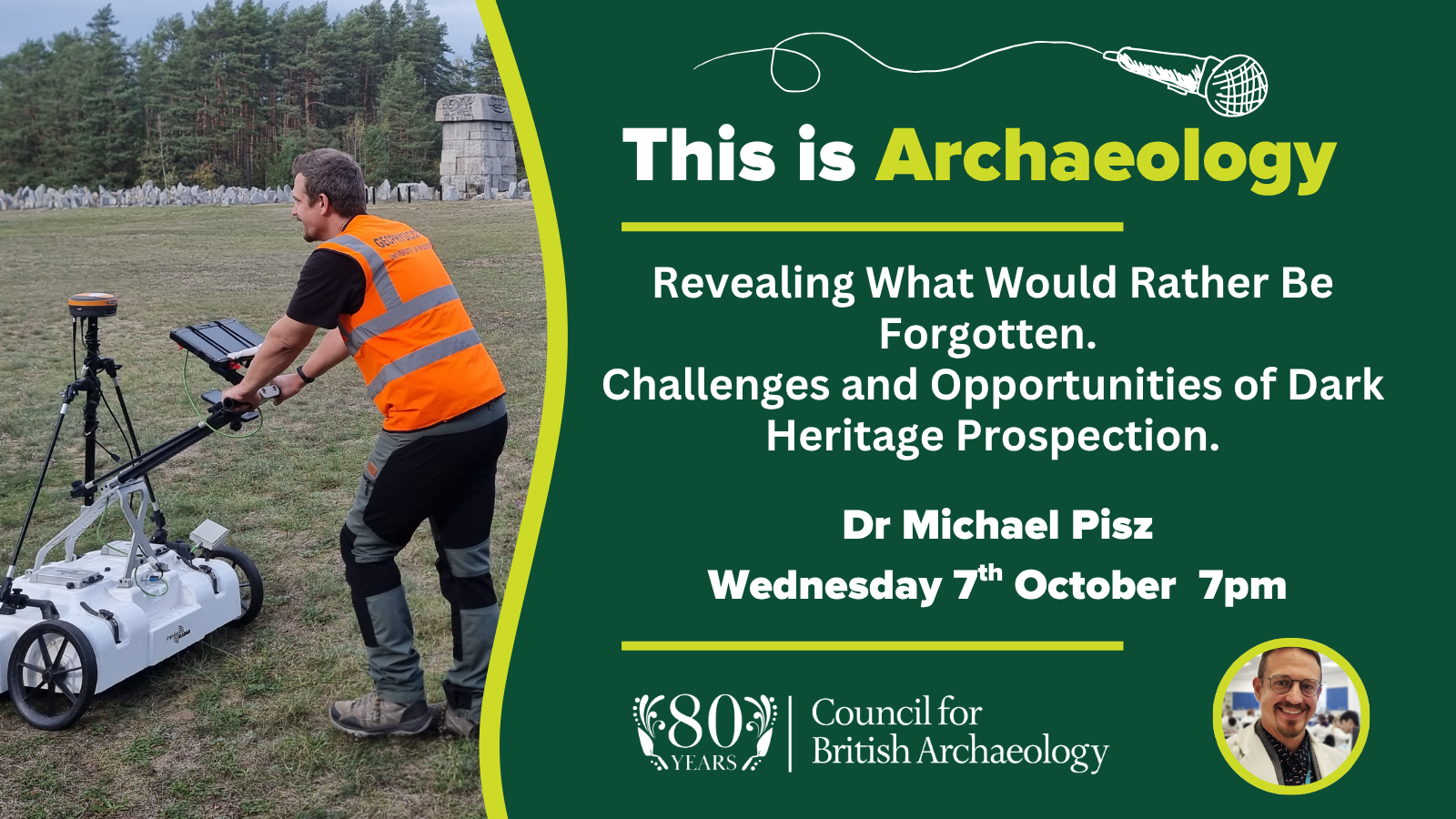
DHP is not solely a technical endeavour. It addresses complex ethical, legal, and communicative challenges: How do we investigate sites that are simultaneously archaeological landscapes, memorial spaces, and in some cases, crime scenes? How do we present findings responsibly, without sensationalising trauma or reopening wounds?
By outlining both the opportunities and difficulties of this work, the talk shows how DHP has the potential to equip the discipline of Archaeology to address the most sensitive and consequential traces of the human past, often being the only suitable solution for researching and recording these traces with respect to various cultural constraints.