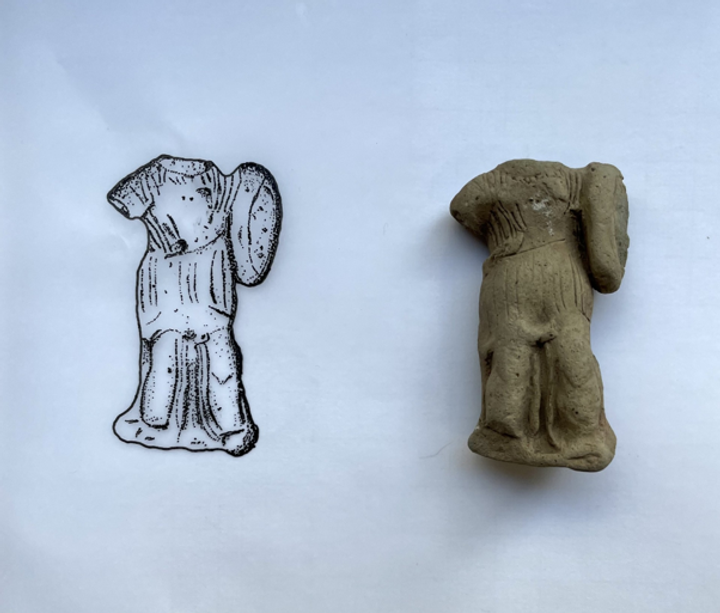
Archaeological Illustration: Practicing Shading and Texture Work
In archaeological illustration, shading is often created by using small dots made with the very tip of your pen rather than large strokes - this is known as stippling. This technique is mostly ued on pottery, metal or bone, or similar small find artefacts; lithics can be different (see below for further information).
In order to highlight and contrast, illustrators will place the dots either closer together or further apart, depending on where there are grooves, indents, missing sections, relief or recesses.
Stippling allows the artist to convey a sense of volume, without implying the presence of a particular texture to the surface of the object. By making the dots either more or less condensed, you can show gradients as to where the object has any grooves, indents, bumps or engravings. This is known as a style or convention, meaning everyone who uses or observes archaeology illustrations will know what the stippling has been used to convey about the object.
When creating shade, it is another artistic convention to assume that your source of light is coming from the top left corner.