Student and Early Careers Conference 2026: Julianna Fike
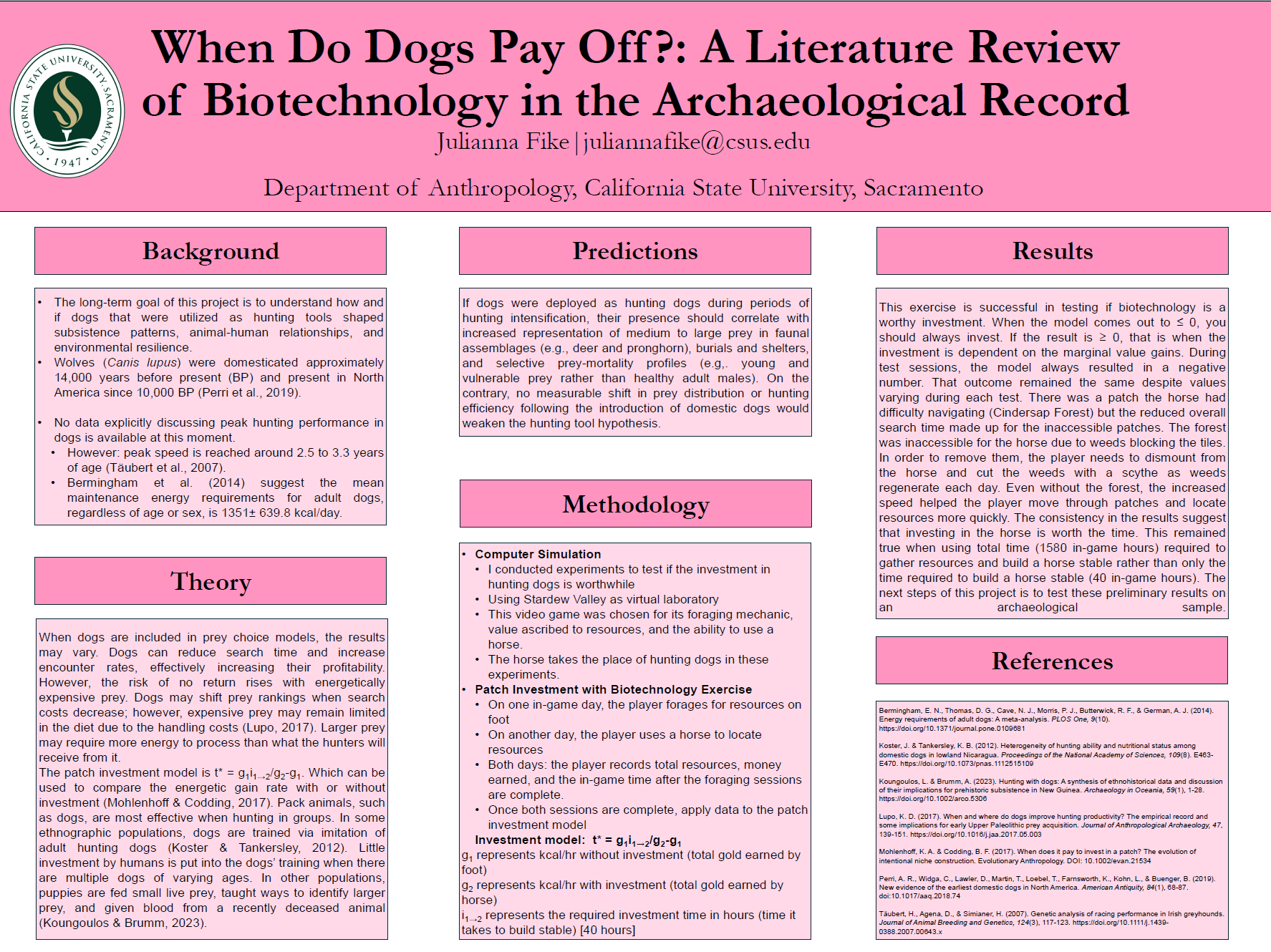
When Do Dogs Pay Off?: A Literature Review of Canids as Biotechnology in the Archaeological Record
Julianna Fike
This poster began as a visual tool for organizing the literature review for my investment in hunting dog projects. Now, it can be used to explain the computer simulation (aka mini game) I created to test if investment in hunting dogs is worthwhile. I created a patch investment with biotechnology game to play in a Stardew Valley save file. On separate in-game days, the player spends the day foraging on foot and the other by horse. At the end of each day, the player records the number of resources gathered, total money earned, and the in-game time. The data gathered is then inserted into the patch investment model [t* = g1 i1→2 /g2-g1].

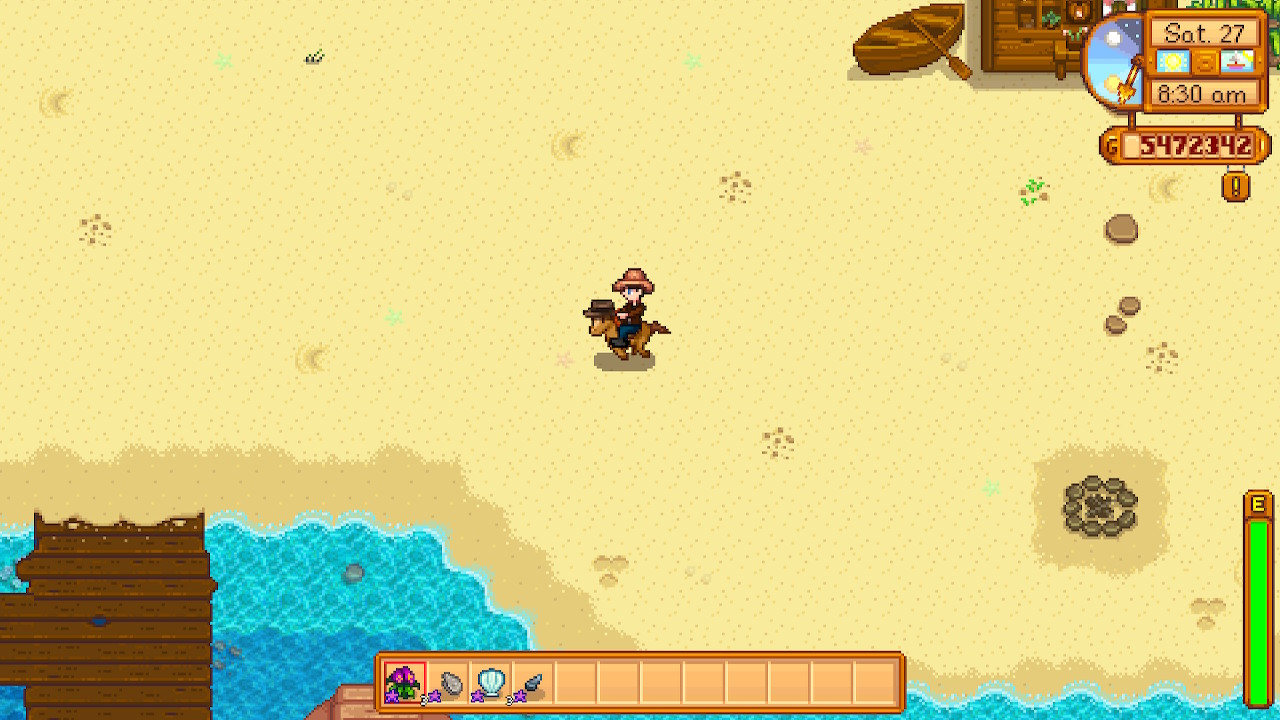
This exercise is successful in testing if someone should invest in biotechnology. When the model comes out to ≤ 0, you should always invest. If the result is ≥ 0, that is when the investment is dependent on the marginal value gains. During test sessions, the model always resulted in a negative number. That outcome remained the same despite values varying during each test. These results are preliminary results as similar tests have not been conducted on zooarchaeological samples.
Download the poster below:

Julianna Fike
Hello! My name is Julianna and I am a recent graduate of California State University, Sacramento in the United States of America. Here, I earned a Bachelor’s of Art in Anthropology with a concentration in archaeology and biological anthropology. I studied the patch investment model in relation to prehistoric hunting dogs. Currently, my project remains a theory based project with simulated tests. I plan to continue to explore this theme through a graduate program.