Student and Early Careers Conference 2026: Tabitha Craig
Society and Identity amongst the Bell Beaker People of Southwest Scotland: An Integrated Analysis of the aDNA and Archaeological Evidence
Tabitha Craig.
aDNA research published by Olalde et al (2018) and Patterson et al (2022) provided insight into the ancestral origins of the Beaker people of Britain and reignited interest in how their arrival from continental Europe genetically and culturally transformed Britain. Our understanding of Bell Beaker populations across Britain are hugely influenced by findings made in southern England and, more recently with the publication of Parker-Pearson et al’s Beaker People Project (2019), north-east Scotland.
South-west Scotland is one of many regions across Britain for which our understanding of the Bell Beaker populations who lived there remains largely unexplored by the modern field of archaeology, despite being home to key sites such as the early female Beaker ‘pioneer’ burial at Sorisdale. To advance our understanding of the British Beakers, attention must turn to these understudied regions. Where the scientific data and archaeological records tell opposing tales of rupture and continuity, respectively, effort should be made to integrate these two lines of evidence to produce comprehensive interpretations of Beaker society, culture, mobility, and ancestry. These were the core motivators and framework of this project.
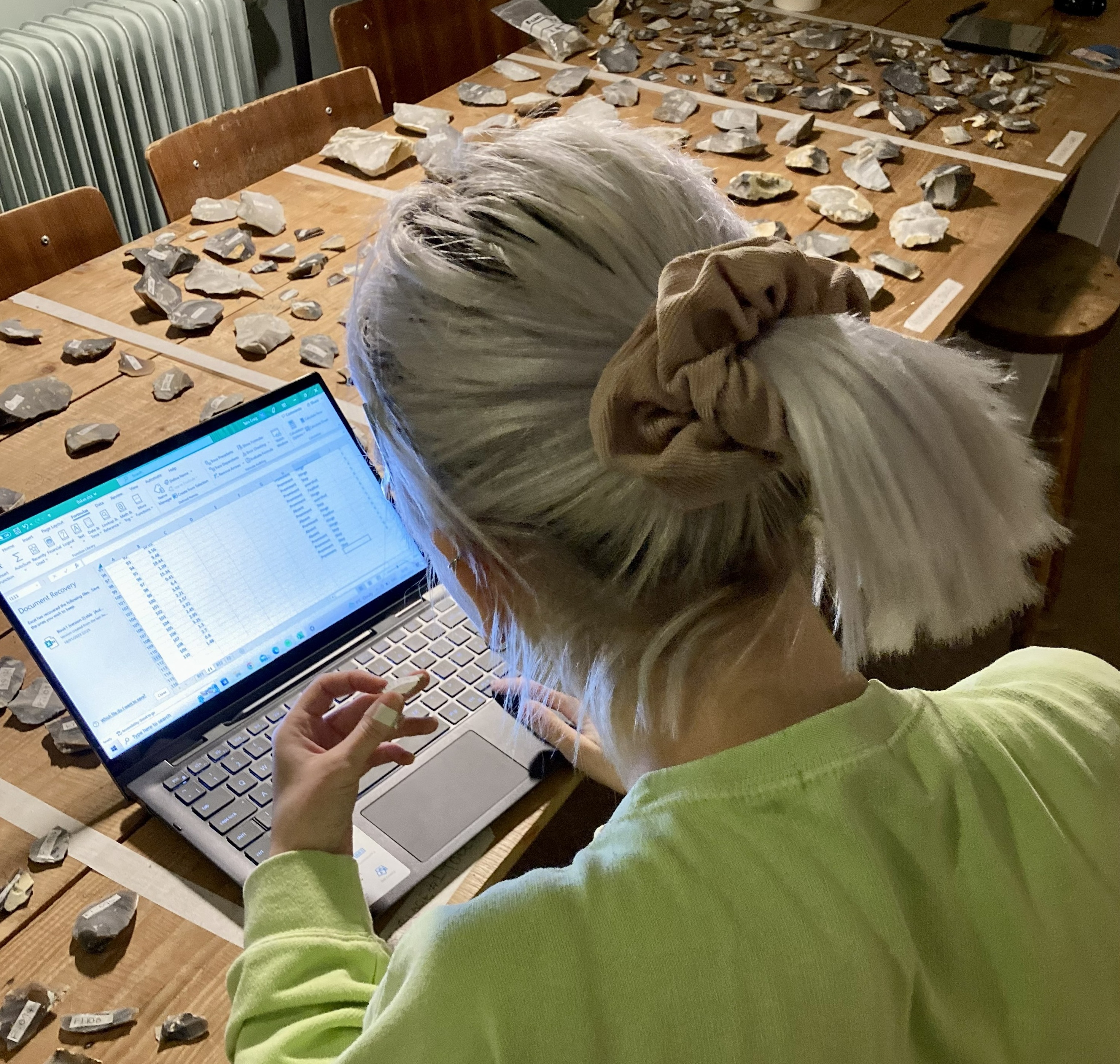
The project employed a data-driven approach that revised antiquated datasets and integrated them with science-led analyses. In doing so, it also highlights the impact of 20th century colonial biases on our current understanding of prehistoric cultures. By integrating the science and archaeology, this study challenges current Beaker studies in Britain, concluding: 1) that age rather than sex appeared to be the defining stratifying feature of burial traditions; 2) Beaker DNA in Scotland had ancestral Steppe origins and shared burial traditions with the Lower Rhine Valley; 3) they lived semi sedentarily across upland and lowland landscapes.
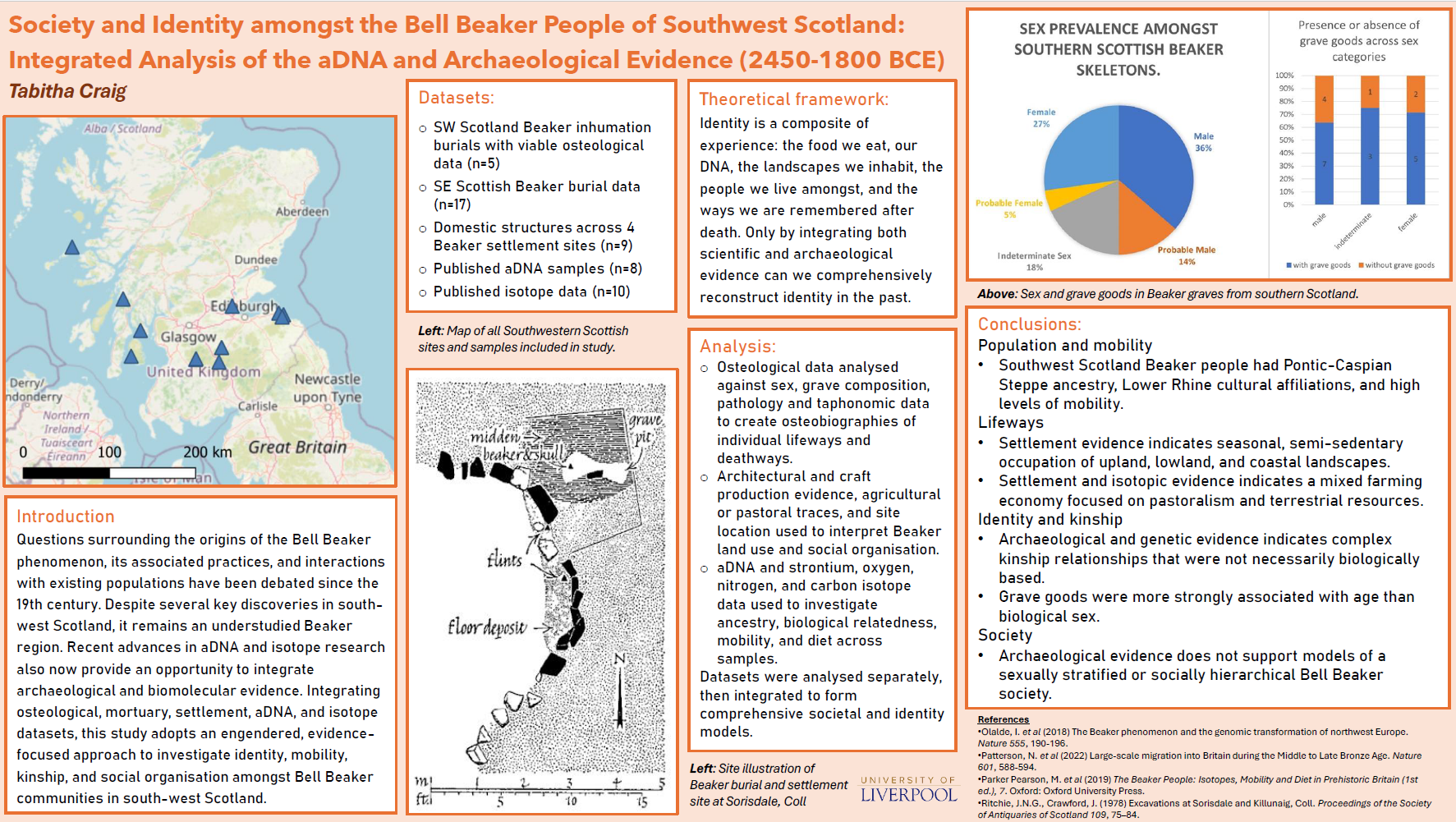
Download the poster below:

Tabitha Craig
Hello! My name is Tabs, and I am a current PhD researcher with the University of Liverpool. I graduated with a Bachelor of Arts in Ancient History with Egyptology in 2022, then went on to graduate with a Master of Arts in Archaeology in 2023. My Master’s research integrated analyses of archaeological, isotopic, and genetic data to make interpretations of identity, society, and mobility amongst the Bell Beaker people of Southwest Scotland between 2450-1800 BC. My poster details the background, methodology, and findings of this project.