Are Commercial Archaeologists Miserable?
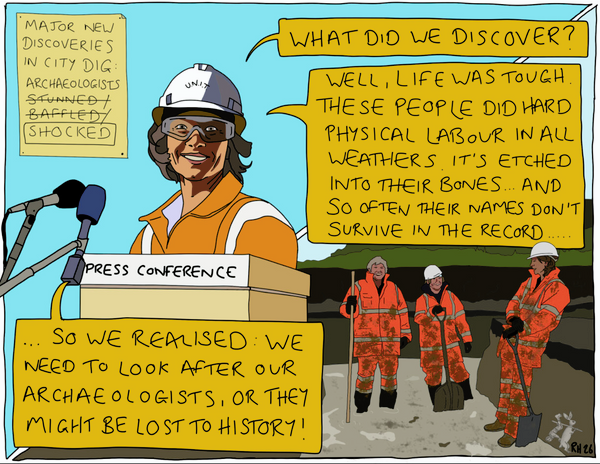
Archaeology provides fantastic wellbeing benefits, as proven through initiatives such as Archaeology on Prescription and Operation Nightingale. It also naturally supports the Five Ways to Wellbeing developed by the New Economics Foundation: connection; being physically active; learning new skills; giving to others; and taking notice. However, a clear gap exists between the wellbeing benefits in community projects and in commercial practice.
This problem was addressed by Sarah May at the 2024 European Association of Archaeologists (EAA) conference with the question, ‘If heritage is so good for wellbeing, why are professionals so miserable?’
Believing it essential to place the perspective of commercial archaeologists at the centre of this conversation, the Diggers’ Forum created an anonymous survey distributed via social media and our newsletter. Out of the 152 individual respondents, all had experience in field archaeology and 59% were active in commercial archaeology at the time of the survey.
Results
Unsurprisingly, when asked to reflect on how archaeology affects their wellbeing, the majority of participants (68%) answered ‘mixed’. The stereotype of the disgruntled field archaeologist is all too familiar, and countless professionals report feeling disillusioned, disheartened, and discouraged. However, the negative aspects of working in commercial archaeology did not fully overshadow the positives. Crucially, 63% of participants agreed that greater focus on social value (e.g. the positive impact of their work beyond its profitability) would increase their wellbeing. Comments throughout the survey reflect a cry from fieldworkers to be engaged and included in the archaeology that they are excavating.
Participants highlighted the joy of connection and sharing their passion – whether with team members or with interested members of the public – and 81% reported that public engagement provided them with social value. However, connecting with members of the community is often discouraged on commercial sites due to concerns from the client or the commercial unit (who want to avoid site invasions, illegal metal detecting, and distractions for the archaeologists during their working hours). As a result, most commercial archaeologists rarely get the chance to connect with locals, thereby missing a vital opportunity to improve their wellbeing.
When asked what they would change to increase the wellbeing benefits of commercial archaeology, many mentioned the difficulties in accessing health resources and poor welfare. Although outdoor work and physical activity were widely recognised as positives for wellbeing, commercial archaeologists also face the pressure of tight deadlines and long stints away from home. This can make it challenging to access key services, which poses the risk of individuals neglecting their long-term health due to the nature of the profession.
Training in commercial units generally focuses on themes such as health and safety and commercial awareness. The survey results reflect a clear appetite for enrichment across other aspects of the discipline, with 110 participants asserting that training and education opportunities provide social value to commercial field work.
Other challenges the survey highlighted include unsustainable travel demands, pay disparities compared to similar professions, understaffing, unrealistic budgeting, and lack of career progression support.
Recommendations
The voices in this survey reflect a clear, urgent call for change – one that prioritises not only the archaeology being excavated but also the digger excavating it. Helpful initiatives could include:
-
Involving field archaeologists in community engagement events
-
Offering short courses or reading groups on enriching topics
-
Raising awareness of health and wellbeing resources, particularly for away workers (e.g. integrating them into Risk Assessment Documentation)
Systematic change remains a challenge, but smaller, achievable steps can make a real difference to job satisfaction and on-site morale.
You can view the survey results on the CIfA Diggers’ Forum page