Our new editor, Anna Sharples, reveals her archaeological journey – My Archaeology
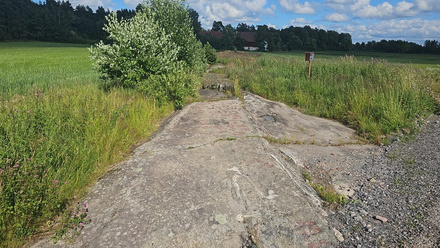
I’ve always had a strong curiosity about the past, encouraged by my dad taking me and my brothers to heritage sites around the UK when we were growing up. I loved exploring ruins and playing hide and seek in them, wandering off the paths to find the best hiding spots. I admit to squeezing through closed gates and running past keep-out signs I’d have a lot more respect for now, but that investigative impulse has definitely stayed with me. I still like to explore the paths less travelled and uncover hidden places.
At my secondary grammar school, I was drawn to the mystery of the classical world and the sanctuary of a small but inspirational Classics department, which became a home for me. Besides playing a pastoral role in my life, the teachers were excellent educators and encouraged a general love of learning beyond the syllabus. I was also lucky to go on school trips to Greece and Rome, which were my first experiences of travelling abroad, and these opened my eyes to the contemporary as much as the ancient world.
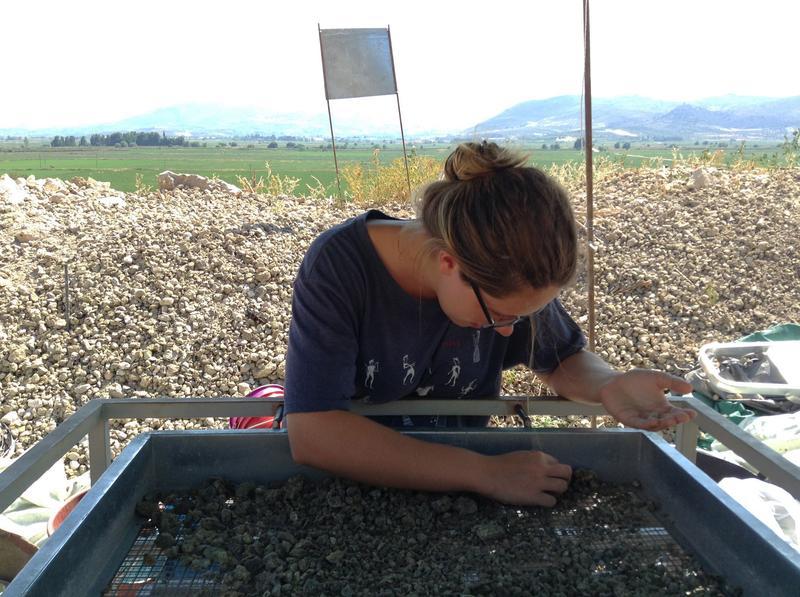
Classics offered the perfect variety for an all-rounder like me, who enjoyed sciences as well as languages and the arts. The undergraduate course at Cambridge has an optional Art and Archaeology track, which I chose all three years, and this opened some amazing opportunities for me. In the summer after I graduated, I took part in the excavation of a Mycenaean chamber tomb cemetery in Greece, near Orchomenos. We’d intended to excavate only the entryway (the dromos) in the first season, but while clearing the earth from the top of the rock-cut chamber tomb, a trowel opened up a hole! It turned out the roof had partially collapsed, which meant there was a lot of soil to sieve, but it also preserved the burial layer. I ended up going back for the following season to finish excavating the tomb. Uncommonly, it was a single burial, which meant we could clearly link all the interred items – including a signet ring, arrowheads, combs and a pair of horse bits – to the buried man and consider the conscious decision-making behind the choice of burial goods.
I recall coming across a definition of archaeology as the study of material remains of the experiences of people who lived before us. I think that word ‘experiences’ is key; it takes you one step beyond the objects to the lives of the people who used them. It makes me wonder about the signet ring found in that chamber tomb. How did it feel on their finger? Did they take it off at night? Did wax get stuck in it when creating a seal? I think these questions are the most revealing about the past, even when there are no definite answers; being confronted with how much we still don’t know serves as a motivator to learn more. I also like exercising my imagination, which probably explains why I’m most drawn to prehistoric archaeology with no written records.
I’ve been writing fiction since I was a child, and I long harboured an ambition to become an author or editor. Following my degree, I secured freelance work to create content and proofread Latin and English for the Cambridge Schools Classics Project. I then worked for a couple of the Cambridge colleges, managing websites, blogs and social media accounts before specialising in producing their internal and external publications. Through this, I discovered my passion for editing. I particularly love its variety; as well as writing and amending text, I research and commission content, project manage contributions, work with print and mail suppliers, converse with readers, choose images and oversee the design. For the colleges’ alumni magazines, I wrote and polished articles that introduced new subjects to an intelligent and interested audience with a strong connection to our mission, which I think has a lot of parallels to British Archaeology magazine.
While I worked at St John’s College, the alumni website was redeveloped, which involved the creation of a fully digital version of Johnian magazine. We kept the printed version, which was very popular, but there was a lot of interest in the digital articles – particularly among readers conscious of their carbon footprint – and many alumni enjoyed the extra images and interactive elements. Archaeological projects produce a wealth of fascinating digital outputs, such as maps, 3D models and videos, and I’m looking forward to seeing what additional content we can offer online to accompany future print issues of British Archaeology.
A stand-out article from my time at St John’s was an interview with Hugh Dennis, who later presented The Great British Dig on Channel 4. When talking about work-life balance, he said, “Work and life shouldn’t really be in opposition if you are lucky enough to enjoy what you do.” That advice really resonated with me, and I’ve returned to it when I’ve encountered crossroads in my career.
I came to the end of the road at St John’s with a move away from Cambridge during the COVID lockdowns and a gradual recovery from illness. During this period of necessary rest, I rewrote a literary suspense novel I’d been working on for a few years about a group of postdoctoral students conducting a medical experiment on an unsuspecting housemate. Although crafting compelling stories has always been part of my job as an editor, I’ve only recently begun to share my fiction writing, and in the past two years I’m proud to have had a couple of short stories place as competition finalists.
By promoting myself on social media platforms (TikTok and Discord), I made contact with other fiction authors, and in recent years I’ve edited novels alongside expanding my freelance client base in the non-profit educational sector. Running my own editing business has been as fun as I’d hoped it would be, but I’ve certainly experienced the freelance feast and famine cycle. During a slow month last summer, I was keeping an eye on part-time roles and contracts that would play to my strengths when I saw that the Council for British Archaeology (CBA) were searching for a new Editor of British Archaeology. I jumped at the chance.
As Editor of the CBA’s flagship publication, I’m aware of the responsibility I have in opening pathways into archaeology to as many people as possible through the pages of the magazine. I was fortunate to gain hands-on experience on archaeological sites as a student, but many people encounter barriers to accessing those sorts of opportunities, and I’m a big supporter of the CBA’s mission to broaden participation in archaeology by redefining what that looks like.
An area of the CBA’s work I was less familiar with is its casework reviewing planning applications and encouraging the sensitive reuse of historic buildings. This has prompted me to take a greater interest in the applications in my area and to follow conversations around the decommissioned Ratcliffe-on-Soar Power Station, which forms part of the iconic view on my walks through the nearby Attenborough Nature Reserve; despite The Twentieth Century Society’s application for it to be listed as Grade II, it has now received a Certificate of Immunity from listed status and is due for demolition in four to five years’ time. If you’d like to do your own online digging, you can enter your area of interest into the search box on this CBA-operated website: casework.jcnas.org.uk.
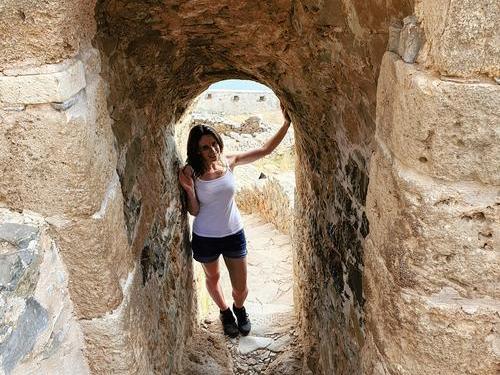
My imminent return to the world of archaeology has supercharged my curiosity. I recently visited Fountains Abbey in north Yorkshire with my dad, reminiscent of trips to other heritage sites when I was a child. The ruins transformed into a playground for my imagination, and I found myself inhabiting the day-to-day experiences of the Benedictine monks at work and at prayer. As Editor of British Archaeology, I hope to inspire readers to similarly view the places they visit (in person or virtually) as living landscapes with vibrant stories.
Familiarising myself with the magazine’s back catalogue, I like the depth and detail of feature articles and think the recent news sections give a good overview of the sector. I want to expand these, where possible. However, the direction of the magazine doesn’t rely purely on my preferences; it should be shaped by those who receive it. I’m therefore keen to open a dialogue with readers, and I’m reading through every response to the recent British Archaeology readership survey. One comment that stood out to me was: “I'm sure that articles must generate some correspondence, yet there is frequently no letters page. Surely there are more worth sharing with the readership?” It may surprise you to learn that the CBA doesn’t receive many letters at the moment. So if this article – or any other – has sparked a question or opinion, please do write to me at editor@archaeologyuk.org.