My life in the ‘movies’
The motor launch ML286 was a spirited WW1 submarine chaser that served in the Auxiliary Patrol Areas II (Shetlands) and III (Orkneys) and now lies half-buried in mud on
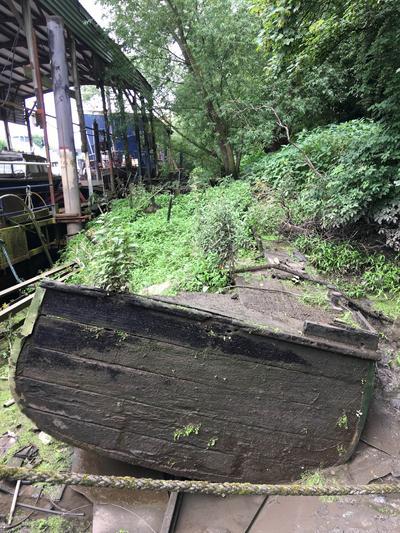
the Thames foreshore. Motor launches were nicknamed ‘movy’ due to their animated movement in the water, and ML286’s shipwrecked archaeology suggests a new type of present-day ‘movement’ for the veteran motor launch as the wreck’s decaying materiality actively oozes secrets, stories, and ghosts.
Expanding on Johnny Saldaña’s concept of ‘ethnodrama’ (a written script comprising dramatised selections of research data) as well as his concept of ‘ethnotheatre’ (a live performance of the researcher’s interpretation of the data), I merged theatre practice with archaeological practice to create what I term ‘archaeodrama’ and ‘archaeotheatre’. Archaeodrama is a written script comprising dramatised research data, which maintains archaeology at the heart of the narrative. Archaeotheatre is a live performance of interpreted data, utilising as much of the archaeological kit as possible during the event.
My 45-minute, one-woman archaeodrama Still Life ‘Movy’ carefully excavates ML286’s compelling story through poetry, song, the archive, the observations of my research participants, my own observations, and the haunting personal accounts of the Royal Naval Volunteer Reserve [RNVR] officers who served in the WW1 Motor Launch Patrol.
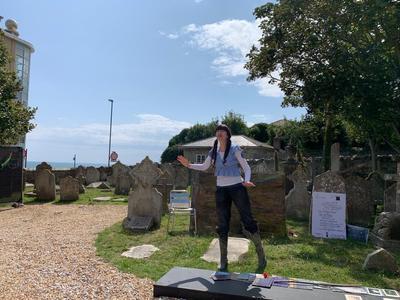
For the live archaeotheatre event, I created what I term an ‘archaeoset’, consisting of a handmade replica of the original 1918 Zeebrugge Concert poster (because material from the original concert features in Still Life ‘Movy’) and a handmade replica of ML286’s transom, which I painted with mud from the boatyard site. Additionally, I created ‘archaeoprops’ – my muddy gloves, bucket and brush, and foreshore walking stick – and my ‘archaeocostume’ comprising muddied waterproof trousers, boots, and a long-sleeve shirt imprinted with the show’s logo.
Archaeodrama and archaeotheatre are creative and impactful methodologies that respectfully enable ML286’s significant history and archaeology to be empathetically excavated, preserved, and shared through storytelling. Moreover, they allow ML286 to remain undisturbed in her natural muddy foreshore environment, remaining sympathetic to the motor launch’s own private and dramatic performance of her decaying materiality – which facilitates her vibrant and rightful return to nature. Hence, the words of Sub-Lieutenant Rupert Brooke RNVR in his poem Heaven ring true: “Somehow, Good/Shall come of Water and of Mud.”