Oral and performance storytelling for archaeological engagement and research
Nearly 98% of UK archaeology is developer-funded, with £0.25 billion spent annually. Most funding supports excavation and publication, reflecting a long-held view that ‘doing archaeology’ is the main public benefit, despite public-sector models now requiring 10% social value weighting.
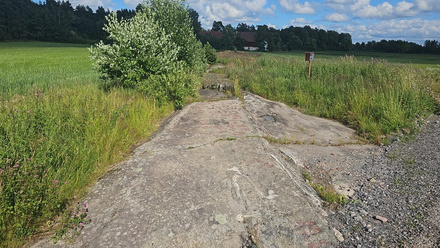
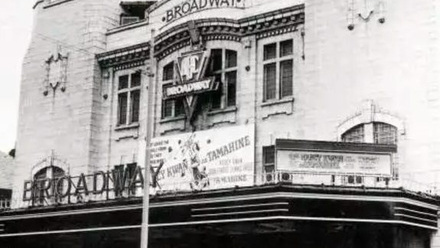
From 2015 to 2019 Archaeology South-East (UCL Institute of Archaeology) excavated at Stepney Way, Whitechapel uncovering the Red Lion – the earliest purpose-built playhouse – and the Georgian White Raven Tavern, where meetings for the Sierra Leone Resettlement Scheme were held. Long after project funds were spent, ASE has sought additional funding to support meaningful community engagement through storytelling and collaboration with London’s Afro-Caribbean Diasporic communities.
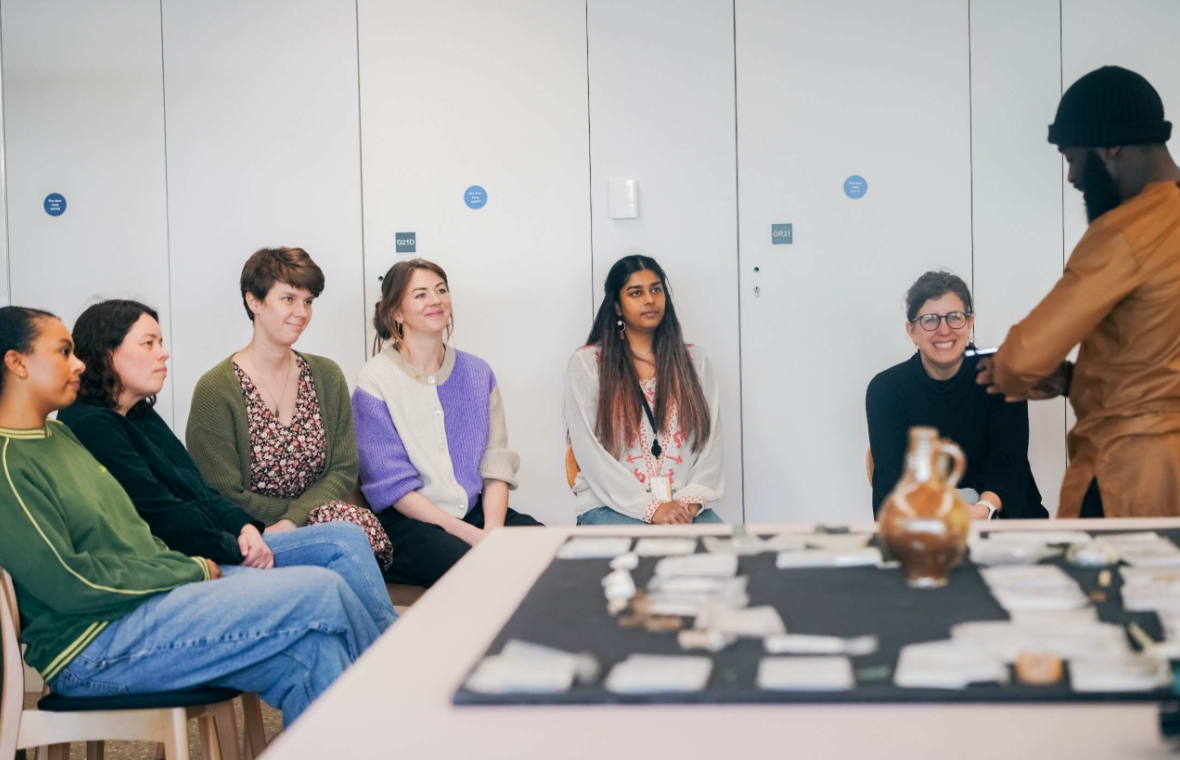
This engagement project works because humans are hard-wired for storytelling. Our brains remember stories more easily than lists of facts because narratives trigger the release of hormones such as oxytocin, cortisol, dopamine, and serotonin. These chemicals create focus, improve memory, and foster empathy and trust – not to entertain or impress, but to connect and create meaning. For hundreds of thousands of years, humans have used stories to communicate, learn, and build community.
Storytelling in heritage is not just a method of sharing research but also of shaping it. Heritage is a process of identifying and valuing evidence, artefacts, and chronologies – forms that reflect specific cultural perspectives. Storytelling, by contrast, communicates real or imagined narratives that can cross boundaries and speak to diverse audiences. It offers emotional distance that helps people discuss difficult topics safely, documents heritage in memorable ways, and fosters collective identity and cohesion. Stories transport us beyond our daily lives, allowing reflection and new relationships with heritage to emerge.
In heritage engagement, storytelling can also serve as a decolonising practice – ‘learning to practice in the presence of history’ (Quayle and Sonn, 2019:48). However, this requires us to challenge dominant Western tropes, such as Joseph Campbell’s ‘hero’s journey’, which centres on individualism and linear progression. Instead, stories should be understood as layered, complex, and interwoven – an approach more fitting for archaeology’s multidimensional narratives.
Indian futurist Pupul Bisht, influenced by Gayatri Spivak’s Subaltern theory, critiques Western storytelling for its linear, evolutionary view of time and its focus on the individual hero. She advocates for storytelling rooted in multiple temporalities and community-centred perspectives (2017). Similarly, Samuel and Ortiz (2021) argue that decolonisation requires protecting the integrity of both story and storyteller. Research should be a transformative process that originates within the community, benefiting it rather than external institutions.
This shift challenges researchers to reflect on their own methods. Coding and analysing stories can strip participants of control over their narratives. Instead, researchers and participants should be seen as co-creators of knowledge, sharing stories for mutual benefit rather than extraction. Bisht’s model of ‘vertical time’, imagined as an iceberg, reframes storytelling: surface-level litanies (headlines) rest upon systemic causes, worldviews, and deep myths. By exploring these deeper layers – what lies beneath rather than ahead – storytelling reconnects us to the unconscious narratives that shape culture and identity. Thus, storytelling becomes both a tool for heritage engagement and a pathway to reimagining time, memory, and collective meaning.
Watch a video on this topic on UCL’s YouTube channel
Further reading:
-
Campbell, J (2003) The Hero’s Journey: Joseph Campbell on His Life and Work.
-
Bisht, P (2017) Decolonizing Futures: Exploring Storytelling as a Tool for Inclusion in Foresight
-
Quayle, A F and Sonn, C C (2019), ‘Amplifying the Voices of Indigenous Elders through Community Arts and Narrative Inquiry: Stories of Oppression, Psychosocial Suffering, and Survival’ in the American Journal of Community Psychology (64: 46–58)
-
Samuel, C A and Ortiz, D L (2021). ‘“Method and meaning”: Storytelling as decolonial praxis in the psychology of racialized peoples’ in New Ideas in Psychology (62: Article 100868)