What did Neanderthals call each other?
Swap a few stories with archaeologists and a pattern often emerges: it is the stories themselves that drew many of us into the discipline. But somehow it’s never felt very ‘professional’ to admit that, and my creative writing secret was kept quite distinct and separate from my Serious Research.
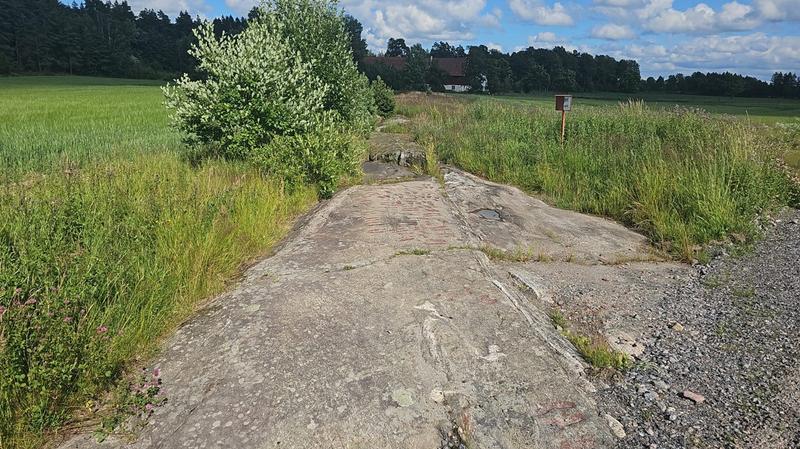
In our recent lead article to this Narrate-create series (Issue 208, pp.46–47) we noted the growing recognition that stories about the past, when grounded in research, can entrance and inspire people. But can they help researchers themselves do better research? When colleagues offered me the opportunity to join their creative work on the ‘Dancing Stone’ – a rock outcrop in Fåglum, Sweden engraved during the Bronze Age with a large number of foot soles – I leapt at the chance to use fictional experimentation to consider serious research questions and theories.
Many stories (whether in a book, film, or game) focus on individual ‘agents’, at least in the global North. However, anthropology suggests the idea of the ‘individual’ may not be quite the same across cultures, even in the present day. And of course it’s often tricky to reach individuals in archaeology, especially as dating resolutions can significantly exceed timescales of the individual human lifespan.
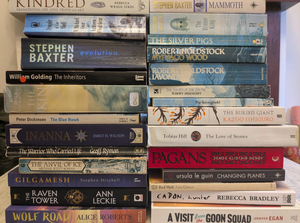
In terms of the Dancing Stone, can we really be sure that foot soles pecked into a rock surface were intended to represent an individual? When writing the Dancing Stone story I took inspiration from writers who have successfully tackled similar problems in generational sagas (e.g. Ken Follett; Edward Rutherfurd), in ‘anthologies’ of multiple short-term snapshots (e.g. David Mitchell’s Cloud Atlas; Jennifer Egan’s A Visit from the Goon Squad), and via unusual forms of narrator with much longer-term perspectives than humans (e.g. Ann Leckie’s The Raven Tower). I opted for a perspective that transcends the individual, emphasising the likely long-term use of the site over multiple generations while also trying to show the potential range of people who might have been involved.
The story also deliberately avoids including direct or reported speech – precisely because the process of thinking this through raised many important questions: What specific languages might have been spoken by people in the past? How could this be rendered in modern-day languages (in this case English) in appropriate ways? Indeed, in the case of Palaeolithic populations, was language used at all? And what about names? We might assume people in the past had names because personal names are universal in human societies today – and as far back as recorded history goes. But how can writers invent names for fictional characters that don’t come with inappropriate cultural ‘baggage’? For this particular story I avoided the issue by focusing on that inter-generational narrative rather than on specific named characters, but I remain very struck by the fact that it wasn’t until I switched perspective to write the story that I even thought to ask the question!
Related to this is of course the question about representation in general. Even professional writers working on contemporary stories disagree about whether writers of different sexes and/or cultures can or should write realistic characters with different backgrounds. How much more complicated do these questions become when – even given our expertise as researchers – we are writing about past cultures, or indeed about different species of human, such as Neanderthals?
Doubtless the resulting story is still permeated by my own culturally-specific assumptions, and I confess here to deliberately avoiding, rather than answering, many of the questions raised here. But the process of writing it has fundamentally changed my thinking about the people my research is trying to understand. Perhaps equally important is that the writing was a lot of fun and reminded me why I got into archaeology in the first place – something we can probably all benefit from occasionally!
This text accompanies the spoken-word story above, based on interpretations and ideas about the Dancing Stone dreamed up in collaboration with project leads Rich Potter and Derek Pitman, as well as the many contributors to the ‘Dancing Stone experience’, which will be outlined in a future issue of British Archaeology. Fiona wishes to thank all the participants in the original TAG session, and especially Laura Basell for comments on an earlier draft.