Ancient Soil DNA is changing how we see past environments!
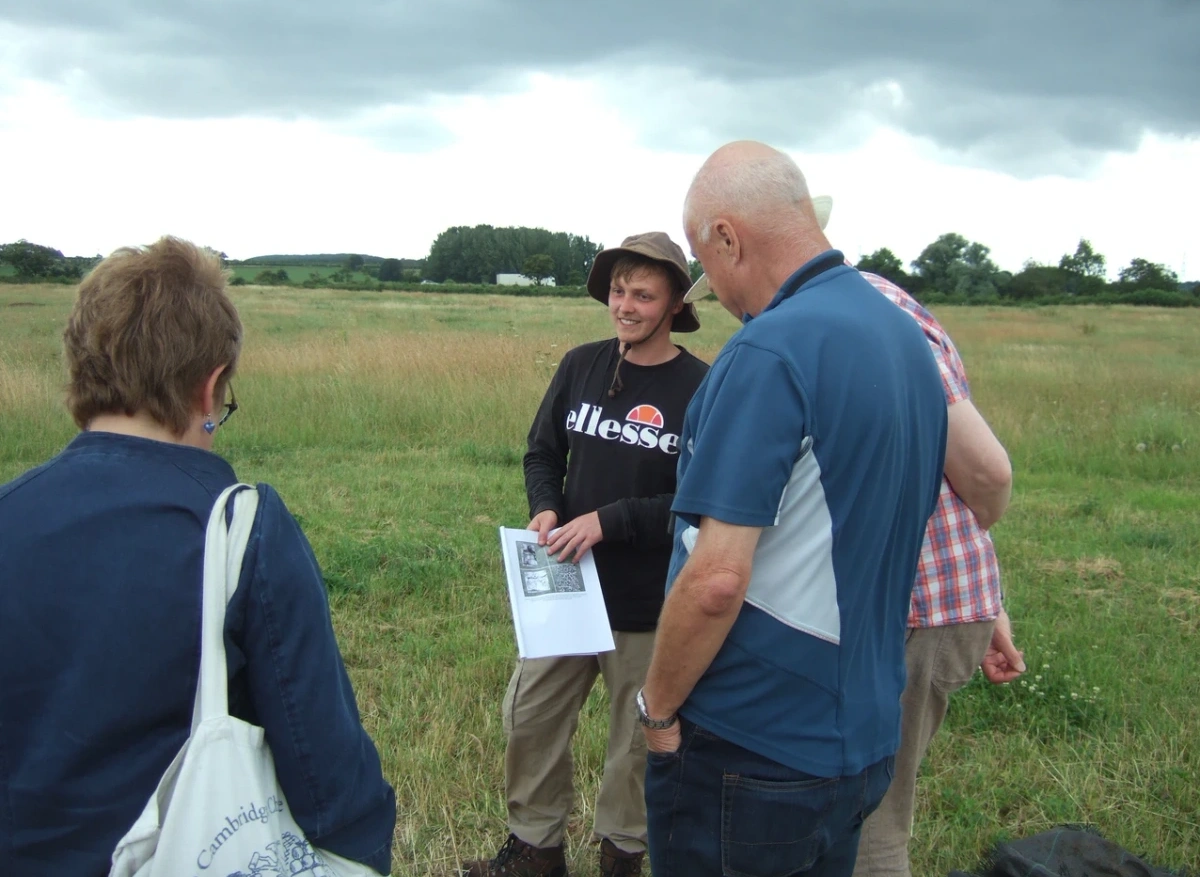
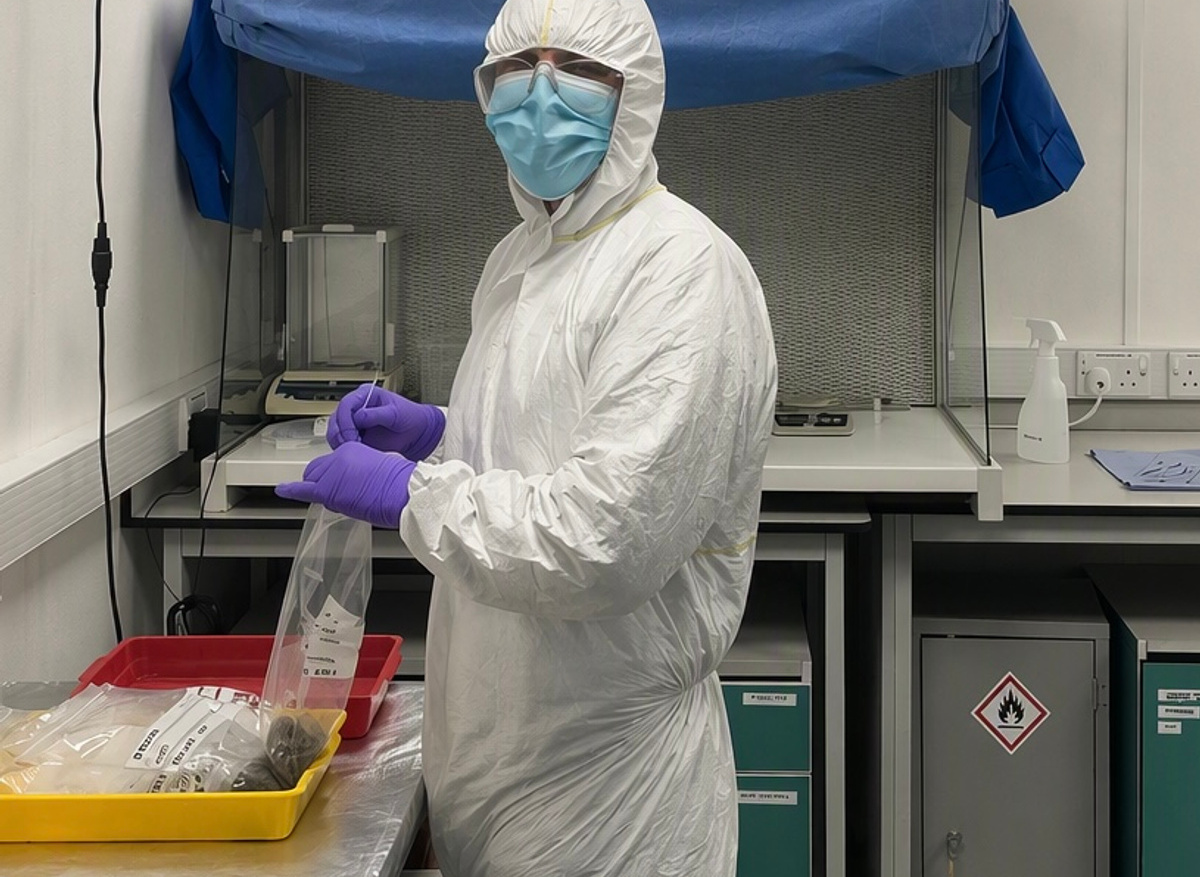
This blog explores how archaeologists are starting to use DNA preserved in soil to uncover the hidden history of past environments. It explains how traditional methods, like pollen, only show part of the picture, and how new techniques can reveal whole ecosystems, from plants to animals, that once lived alongside people. By using real-world examples, the blog shows how even ordinary soil can hold extraordinary stories about the past. At its heart, it’s about understanding how humans and nature have always been connected, and why discovering those past relationships can help us better understand the environmental challenges we face today.
As an environmental archaeologist, when I read about our current environmental crisis and the unprecedented role that modern humans have played in this, I think about whether ancient people were similarly aware of their own capacity to shape the natural world around them. If we think about it, it’s probably quite an easy question to answer. After all, people have been clearing woodland, growing crops and domesticating animals for some 12 thousand years… sometimes for much longer! Others have shaped entire landscapes, changed river courses, built towns and road networks – often carving out the very foundations of the environments we walk in and experience today.
Archaeology has helped us massively in understanding when, where and how these things happened… allowing us to ask and answer questions like “why did people eat this particular crop? “Was this cow a ritual sacrifice, or just food?” or “Why does this Roman road have less potholes than my stretch of the A1?”. All very sensible archaeological questions, of course.
However, these are all very human-centric perspectives, and I like to echo the argument that humans did not, nor continue to live separated from their natural worlds.
Perhaps a good way to think about this is an orchard. Everything within it is individually complex: the types of trees, the varieties of apples, the flowers and weeds below them, the insects that pollinate them. Yet, the orchard itself is a human design, entirely dependent on this living system.
As Oliver Rackham so elegantly put it:
The first step on the road to pseudo-ecology is to confuse ecology with environment: to treat living creatures as part of the scenery of the theatre, rather than as actors in the play. Plants and animals are not a generalized nature, not the passive recipients of whatever mankind chooses to inflict on them: they are thousands of individual species, each with its own behaviour which has to be understood. An ash tree differs from a pine to much the same degree that a cat differs from a codfish. Cutting down the pine kills it, but the ash sprouts and recovers…”
So why do we tend to separate the human and non‑human past? In part, it’s because reconstructing entire ecosystems in detail has been quite difficult. Traditionally, archaeologists like to rely on proxies like pollen.
Aside from making you check your supply of antihistamines; pollen is remarkably sturdy and can survive some of the toughest conditions through time. Better yet, each plant, or tree, produces its very own type of pollen grain – some are spiky, others smooth, some have ridges, pores and even air sacs to help them move by the wind. Archaeologists can use these features to identify the types of vegetation growing near a site, or even which crops were being grown by local people. Pollen is simply an amazing archaeological tool.
What about everything that doesn’t produce pollen? The insects, animals, birds, and even microbes living in the soil? These make up a huge part of any ecosystem, yet they are sometimes invisible in the archaeological record. So how might we fix this?
Well, a relatively recent scientific breakthrough might help us begin to answer these questions.
Think back to your days in school – specifically biology class. You may remember a funny little molecule known as deoxyribonucleic acid… or more commonly: DNA. Every living organism has it, and it acts as the blueprint for life, containing the instructions that determine how an organism grows, functions and reproduces. From the colour of your eyes, to the size of an apple growing in that orchard – DNA is the foundation of life itself.
Archaeologists have been using it for quite some time now. By extracting DNA from ancient bones, teeth and even preserved plant remains, they are able to uncover stories that artefacts alone cannot tell – like, revealing how ancient people moved across continents, or how they developed immunity to certain diseases.
DNA doesn’t always stay in an organism – think about your favourite forensic crime show! Every time you touch something, move around, cough, sneeze, yawn, breath (you get the gist) – your DNA is being expelled. The same thing also applies to other organisms. When the flower of a plant wilts away and dies, it drops to the ground, and its DNA enters the soil.
Under the right conditions, DNA can stay locked away in the soil for an astonishingly long time. In Greenland, for example, scientists have recovered DNA from reindeer, hares, geese and even mastodons (an extinct elephant relative) preserved in permafrost sediments – dating back over 2 million years! Even more remarkably, in Siberia, researchers were able to read DNA directly from cave soils to uncover the presence of not one, but three different species of human: Denisovans, Neanderthals, and of course, modern humans – each appearing in different layers of the cave. Alongside them, the same sediments revealed animals, like bears, hyenas and wolves, allowing scientists to track environmental change over hundreds of thousands of years – all from what is, essentially, ancient mud!
As a PhD researcher, I am on a mission to unlock these buried genetic archives and use them to understand how past ecosystems responded to human activity – especially during times of intense human activity, like in the Roman period. We already know that Roman industry, for example, shaped landscapes on a massive scale, but what’s still missing is a clear picture of how plants, animals and entire ecosystems actually responded to those pressures.
That’s where soil DNA comes in. By combining it with more traditional approaches, like pollen, I’m trying to build a much more complete, multi-layered view of past environments – one that captures not just what humans were doing, but how the natural world was reacting alongside them. Because ultimately, these weren’t separate systems. They were, and still are, deeply intertwined.
And that matters now, more than ever. Today we’re facing our own environmental crises. From biodiversity loss to climate change. By understanding how past ecosystems responded, adapted – or sometimes failed – under pressure, we can begin to place our current challenges within a much longer history of human-environment interaction.
And the exciting part? Those answers might already be sitting in the soil beneath your feet.
Kjær, K.H., Winther Pedersen, M., De Sanctis, B., De Cahsan, B., Korneliussen, T.S., Michelsen, C.S., Sand, K.K., Jelavić, S., Ruter, A.H., Schmidt, A.M. and Kjeldsen, K.K., 2022. A 2-million-year-old ecosystem in Greenland uncovered by environmental DNA. Nature, 612(7939), pp.283-291.
Rackham, O. (1996). Ecology and pseudo-ecology: the example of ancient Greece. In G. Shipley & J. Salmon (Eds.), Human landscapes in classical Antiquity: Environment and Culture (pp. 16–43). Routledge.
Zavala, E.I., Jacobs, Z., Vernot, B. et al. Pleistocene sediment DNA reveals hominin and faunal turnovers at Denisova Cave. Nature 595, 399–403 (2021). https://doi.org/10.1038/s41586-021-03675-0
Tommie Bloomfield
Hi there! My name is Tommie and I’m a postgraduate researcher in Ocean and Earth Science at the University of Southampton. My work sits at the intersection of archaeology and environmental science, where I explore how past human activity shaped the natural world. I’m particularly interested in using new techniques, like sedimentary ancient DNA, to uncover hidden ecological stories from the past - looking beyond artefacts to understand entire ecosystems. Through my research, I aim to better understand the long-term relationships between people and their environments, and what they can tell us about the challenges we face today.